Dallas Sport Collective
A six-trainer gym in North Texas with a schedule you can talk to. Marketing site, booking platform, and an MCP server that connects athletes' own AI.
Field AI Scheduling MCP Integration Brand & Web
Author Jeremy Prasatik Published: 2025 Status: Live Two locations
Classification Web Design Product Design AI Integration Full-Stack Engineering
TL;DR Built→ Marketing site, scheduling platform, MCP server (11 tools)Scope→ Design and full-stack, brand to backendStack→ Next.js on Vercel, MCP, OAuth 2.0Angle→ Enterprise plumbing at gym scale. The AI only ever asks; one deterministic engine makes every booking.
Abstract
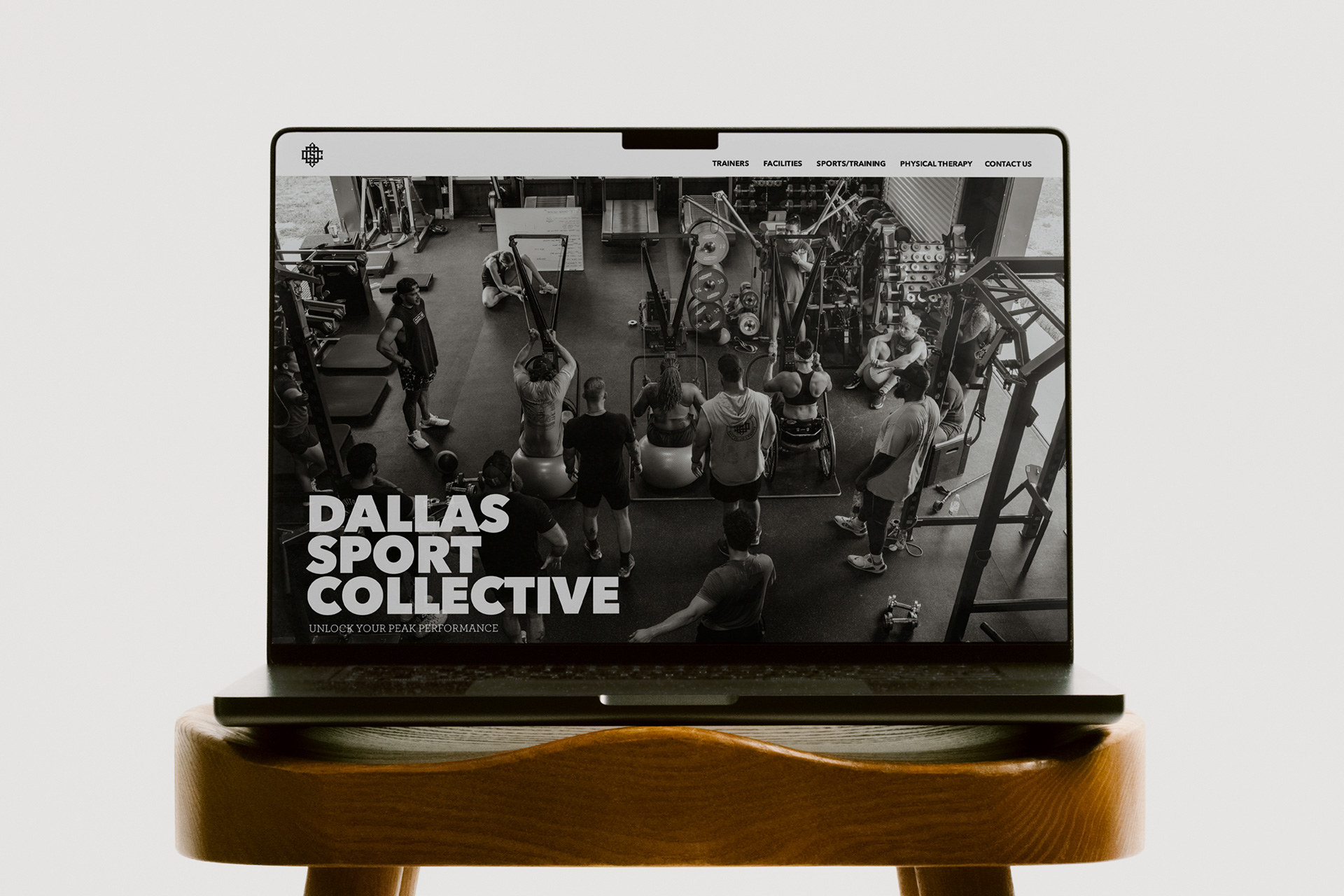
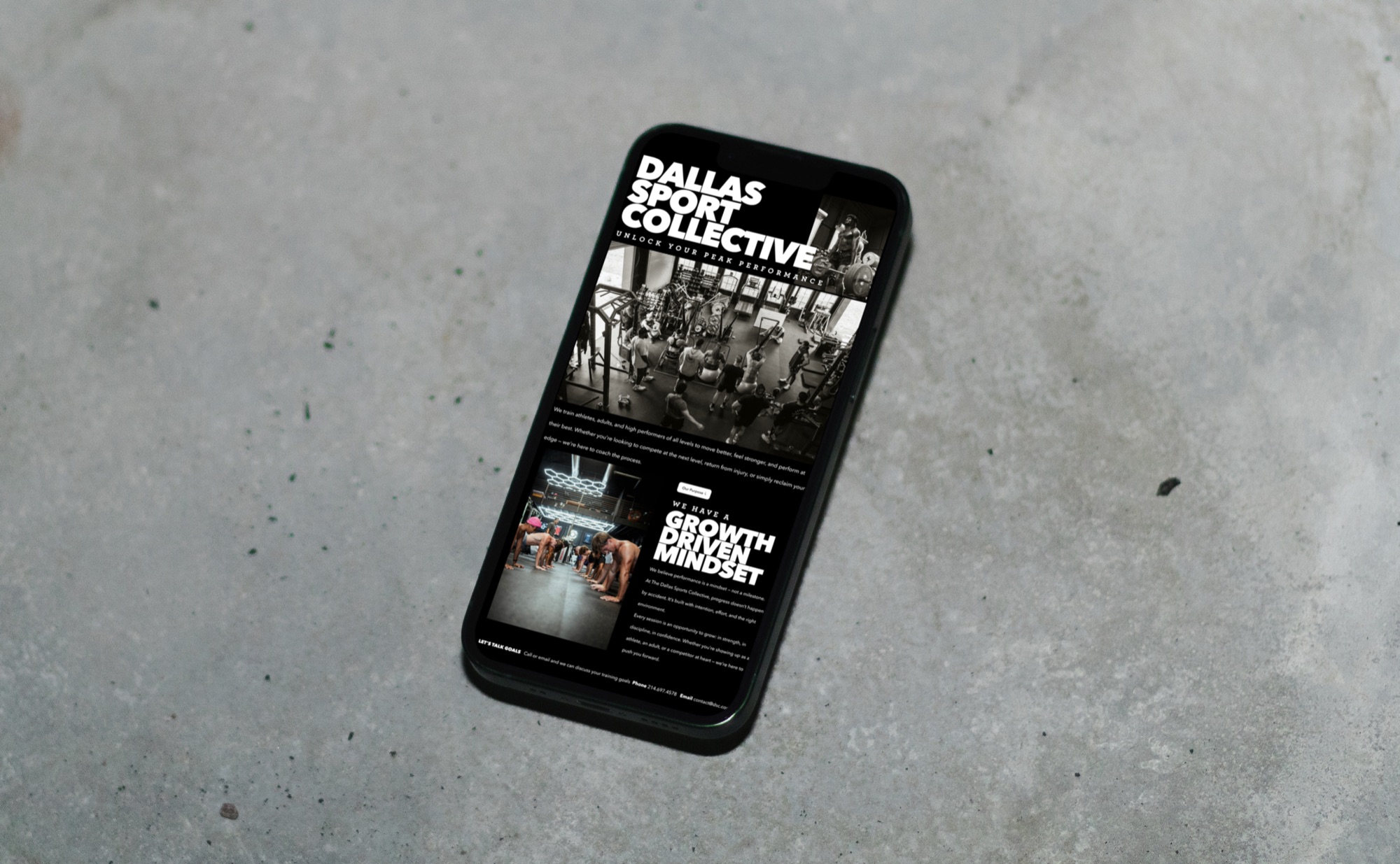
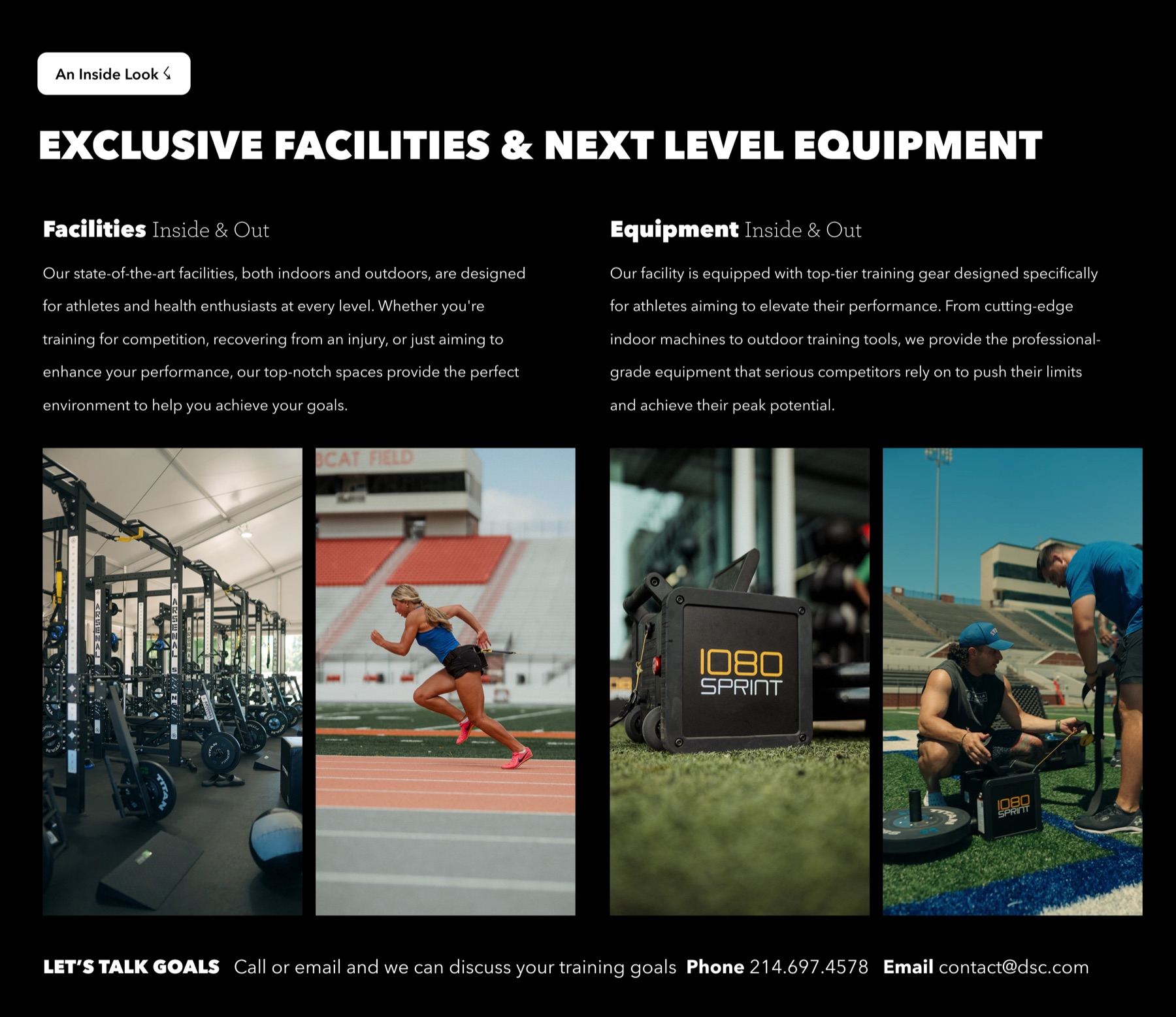
Dallas Sport Collective grew from a handful of athletes to more than a hundred, and the schedule holding it together was a pile of texts, handwritten notes, emails, and a Google Sheet nobody fully trusted. The founder needed two things at once: a brand that matched where the gym was headed, and a back office that could keep up. Six trainers, eleven programs from NFL Combine prep to prenatal fitness, open seven days a week, out of Celina and McKinney, Texas, with a Frisco headquarters on the way.
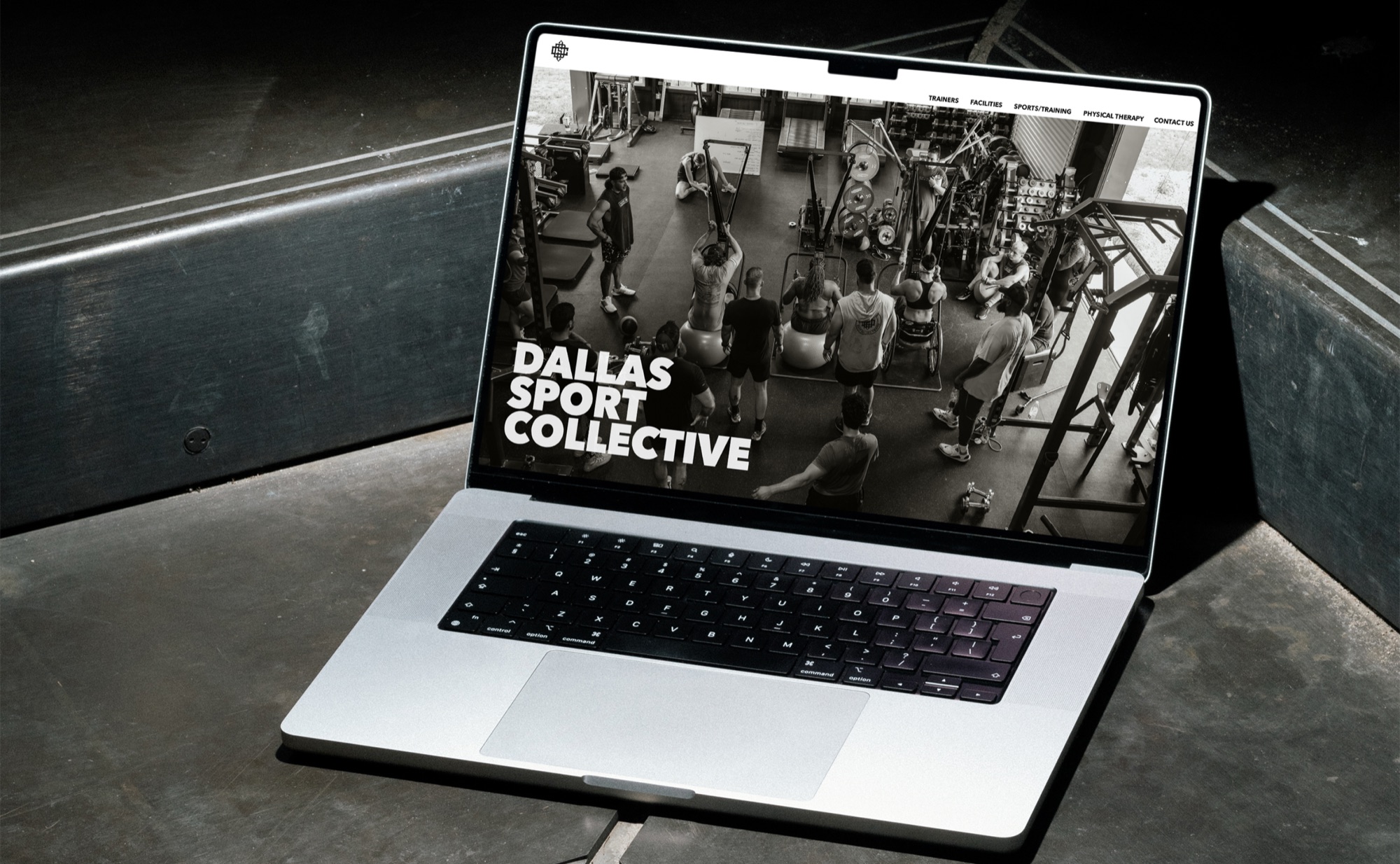
I worked with DSC to design and build a marketing site that sells the room: black and white, big condensed type, photography of actual members training. A scheduling platform with two faces: an athlete app for booking sessions and an owner console for saying a week of scheduling out loud and approving each request with one tap. And the part I find genuinely fun: an MCP server with eleven tools, so athletes can paste one URL into Claude or ChatGPT and ask their own AI what's on their schedule, which trainer fits a goal, or to book Friday at 10am.
Every booking, whether spoken out loud, requested by an athlete's connected AI, or made with a tap on the calendar, flows through one deterministic engine that checks trainer availability, double-bookings, floor capacity, allowed durations, and cancellation rules. The AI only ever asks; it never decides. Next.js on Vercel, OAuth 2.0 consent with short-lived tokens, live at two locations.
Enterprise plumbing for a gym with six trainers
Join the Collective
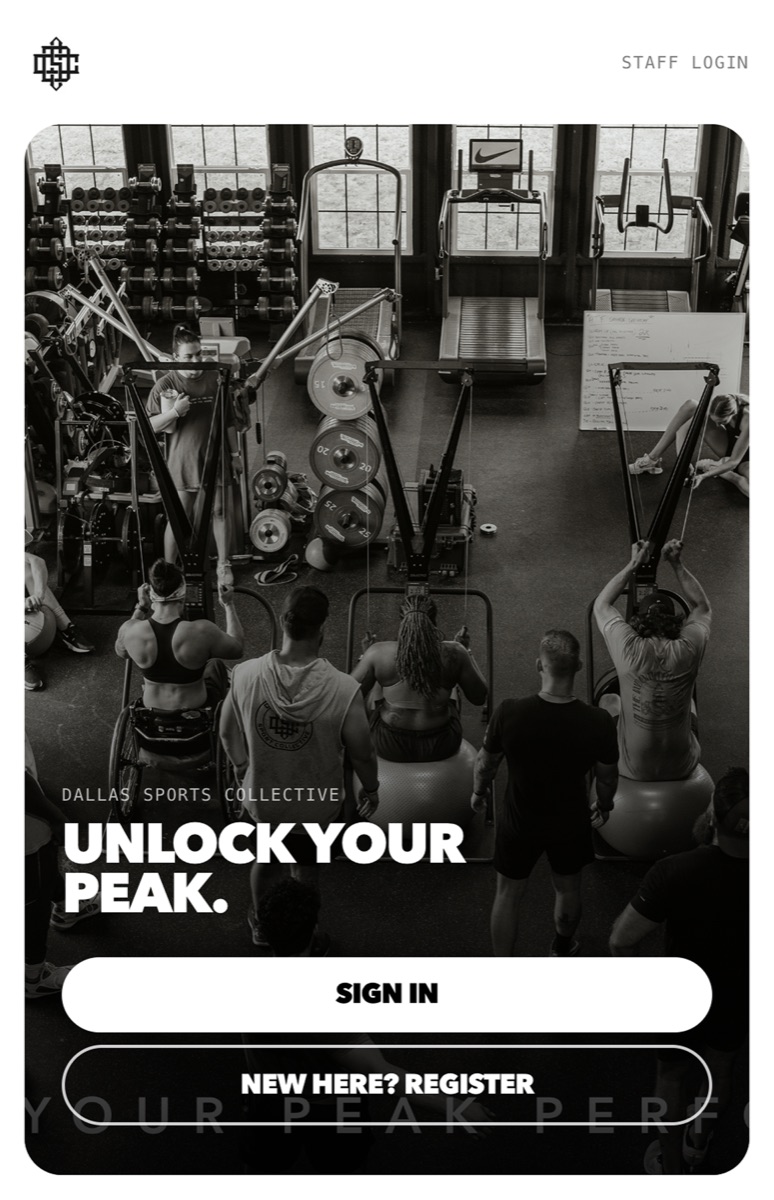
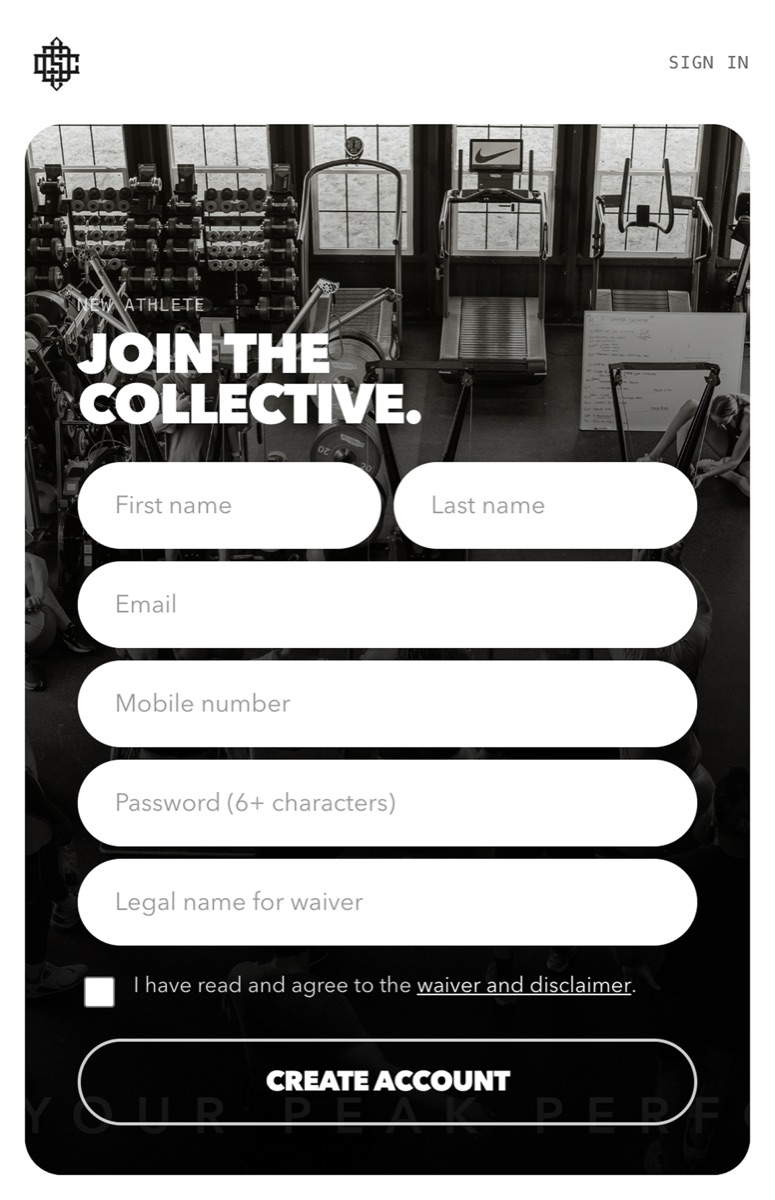
None of the scheduling works until everyone is in the system. So the first build was the front door: athletes create their own accounts, sign the waiver on the way in, and the owner assigns each new member to a trainer before a single session books.
Athlete login and registration. A hundred-plus people moving off text threads and a spreadsheet into one roster the software can work with.


The Gym That Speaks MCP
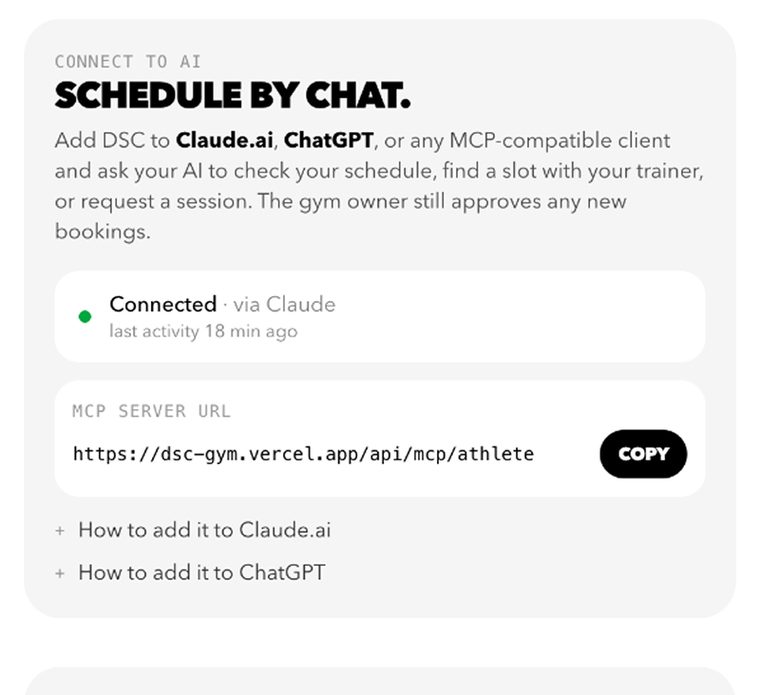
An athlete never has to open our app. They ask the AI they already use, ChatGPT or Claude, and it reads their real schedule and can put in a session request.
Eleven tools cover the gym overview, the program list, trainer profiles and availability, the athlete's own sessions and pending requests, slot suggestions, booking requests, and cancellations. Reads answer instantly, writes only ever create a pending request the owner has to approve. Connecting runs through an OAuth consent screen with short-lived, rotating tokens, and access revokes from the dashboard in one tap.
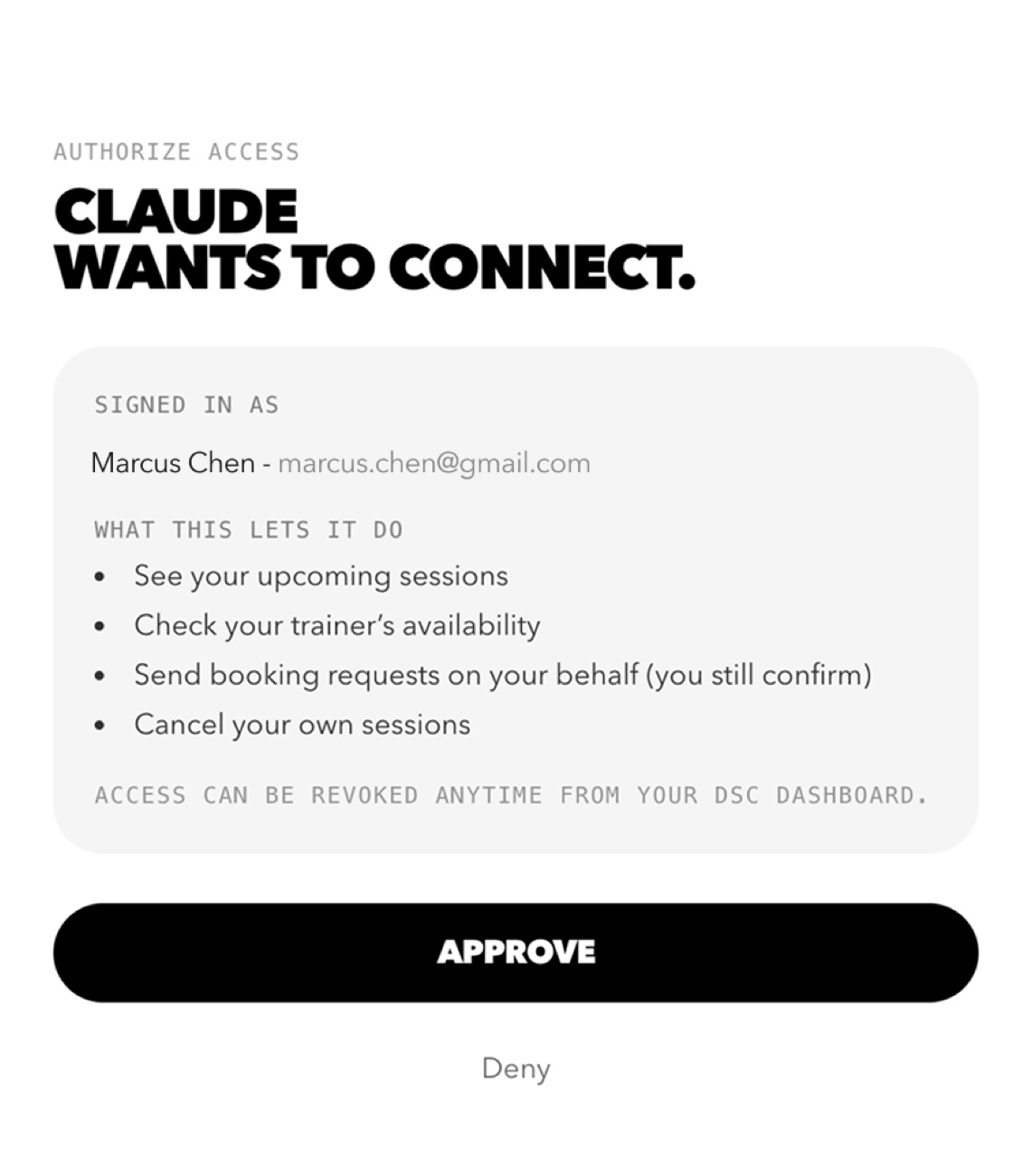
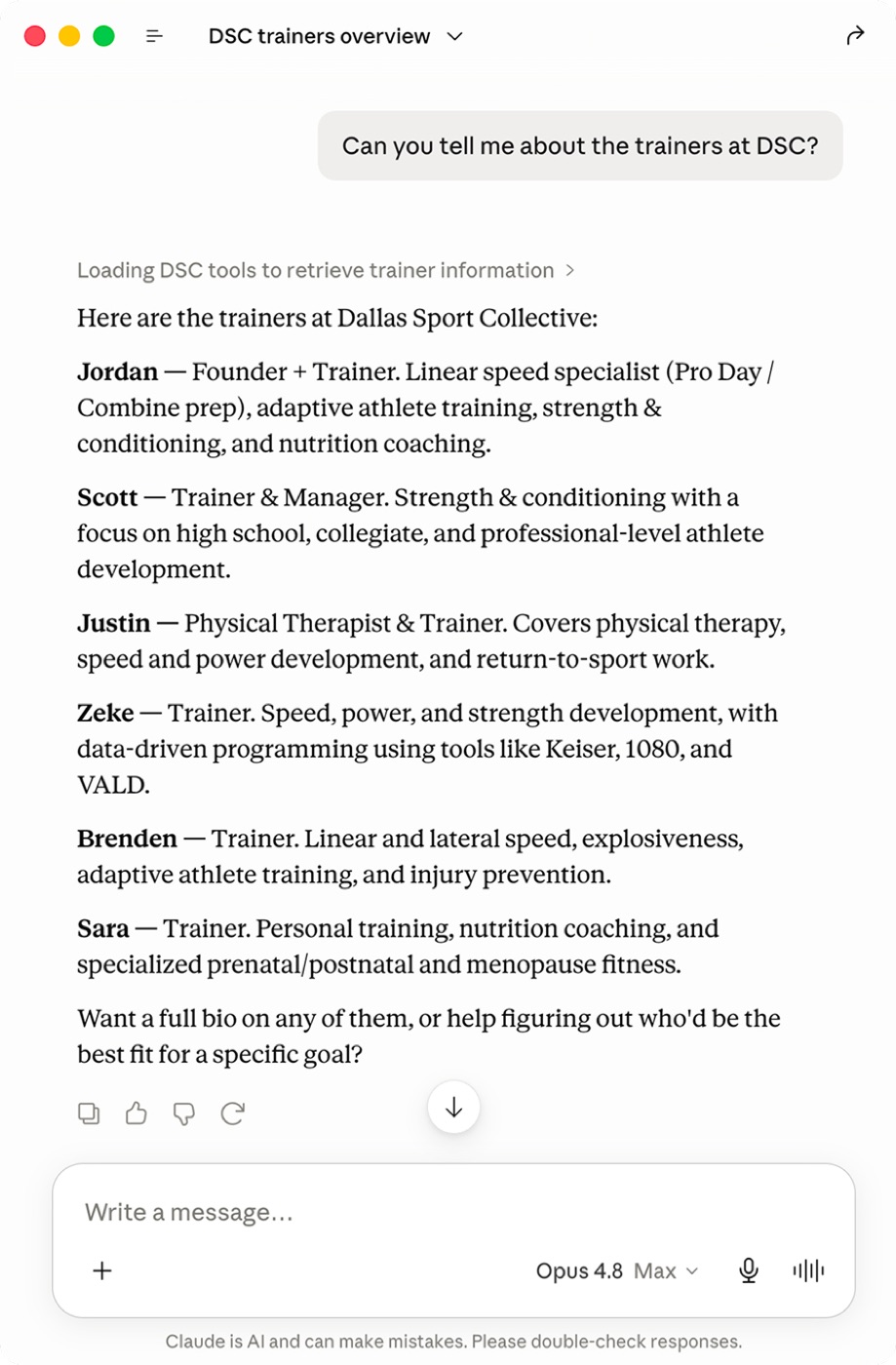
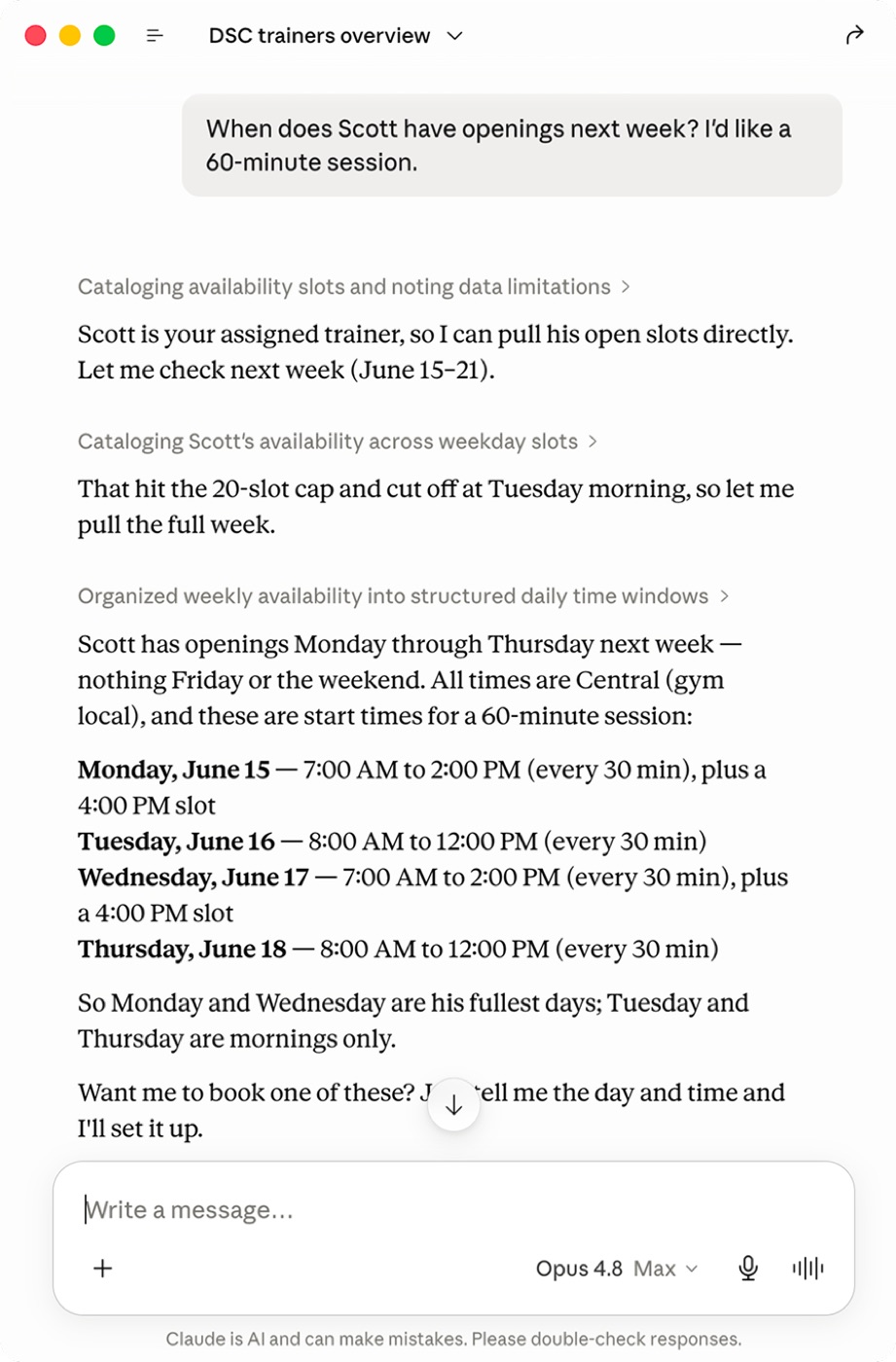
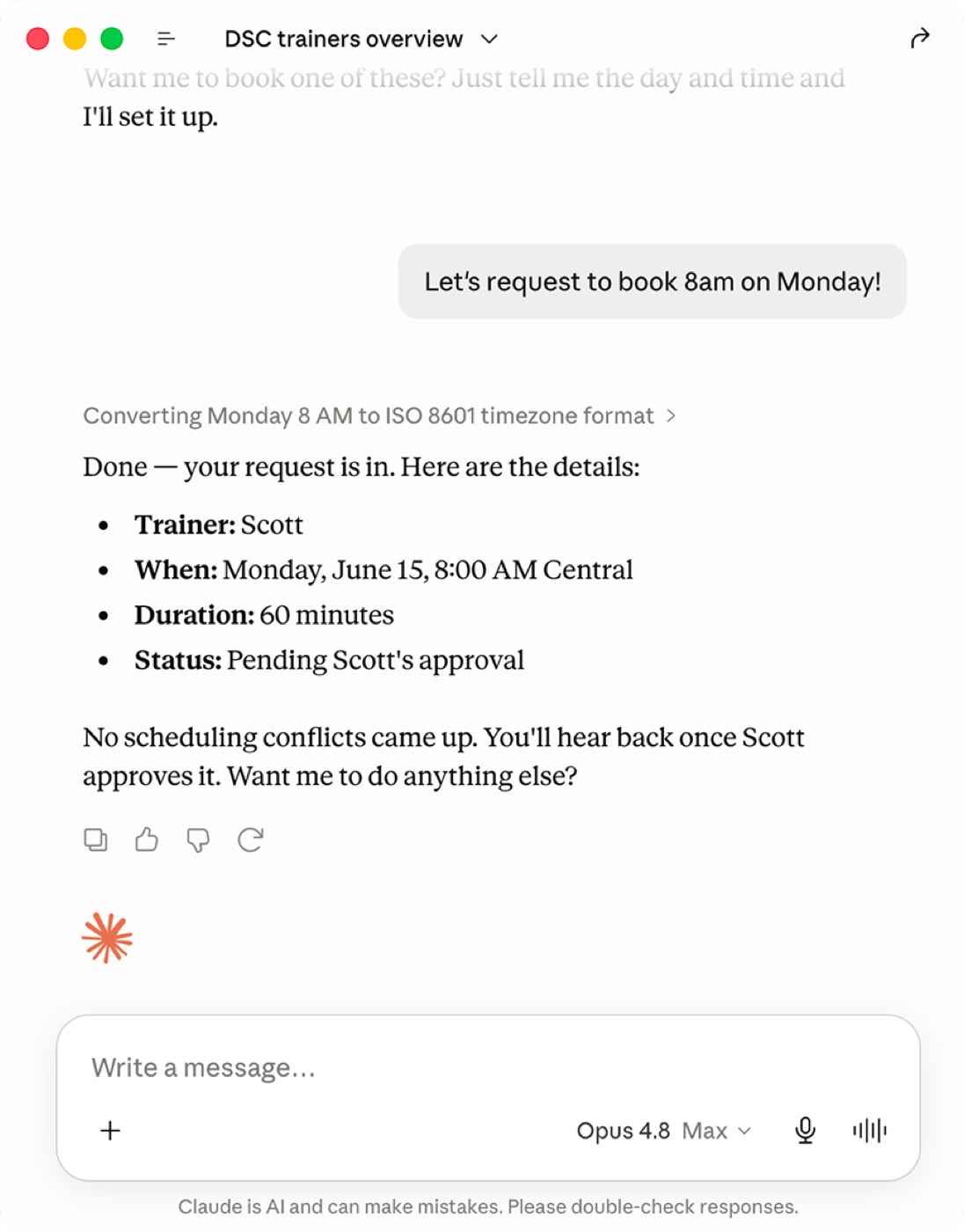
The athlete asks Claude Claude asks the gym the gym answers
What Athletes See
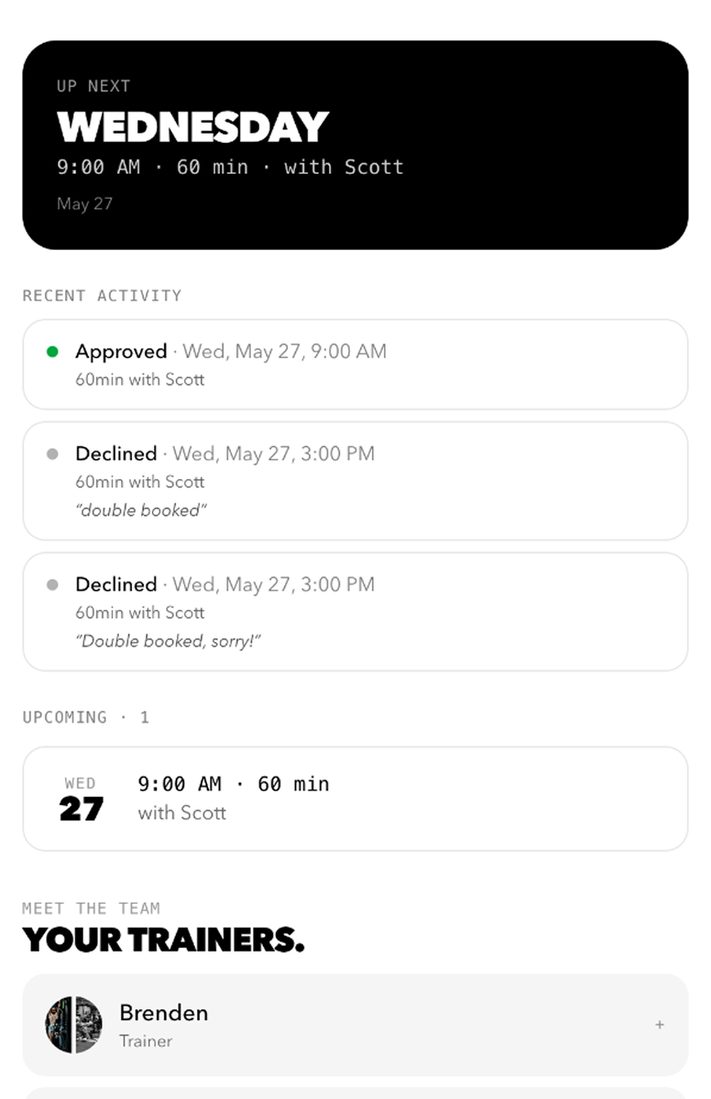
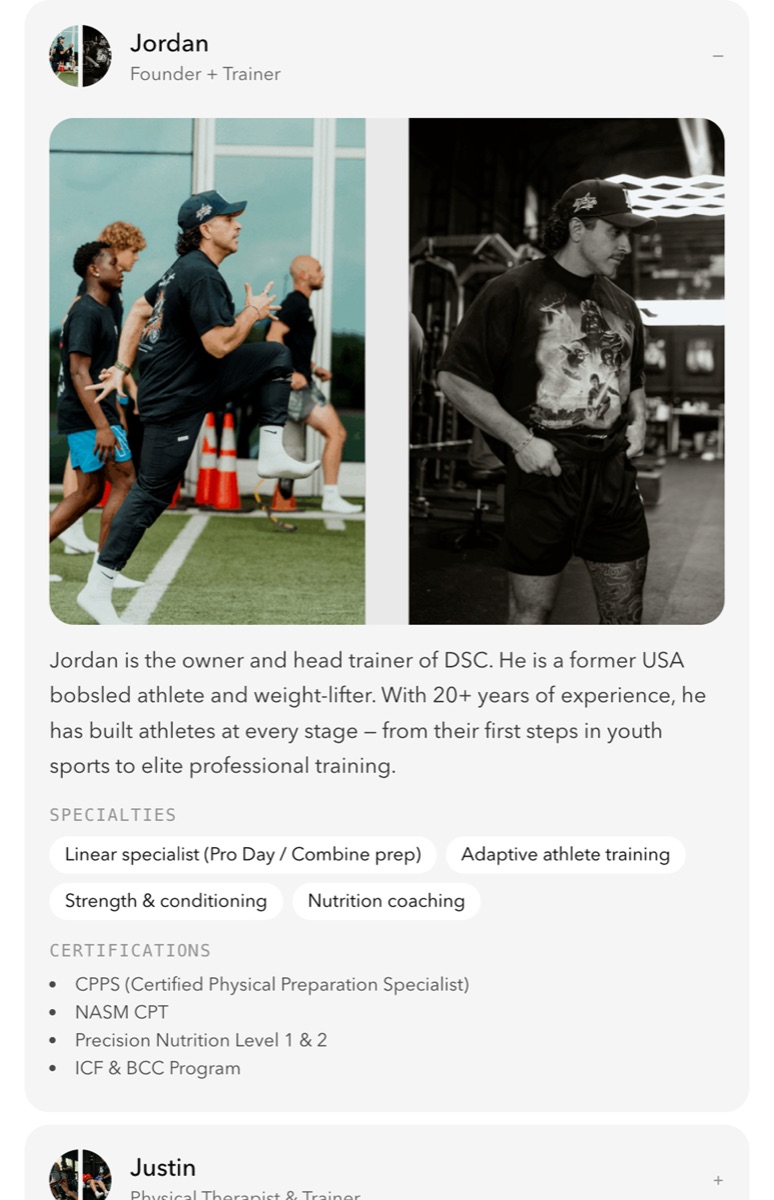
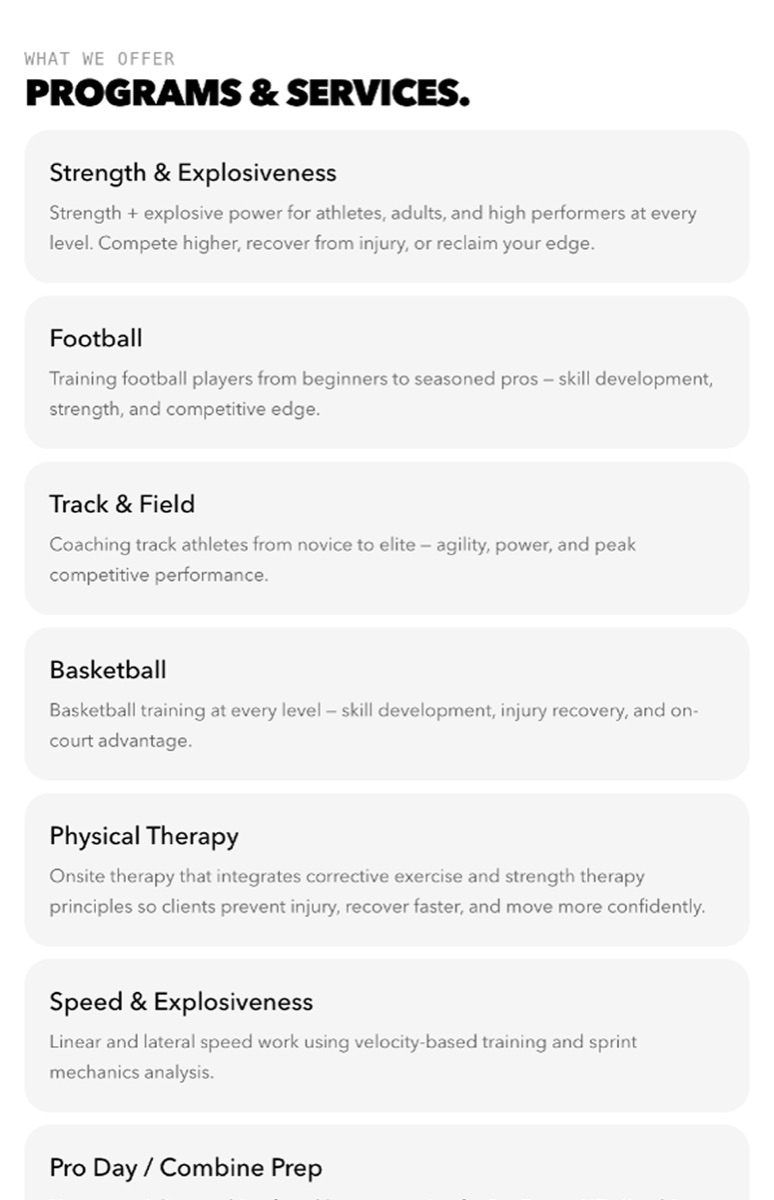
The athlete app opens on the next session and the activity around it. Past that, the full trainer roster and the program menu. The same trainer data feeds the MCP server, so a connected AI describes a coach from the record, not guesswork.
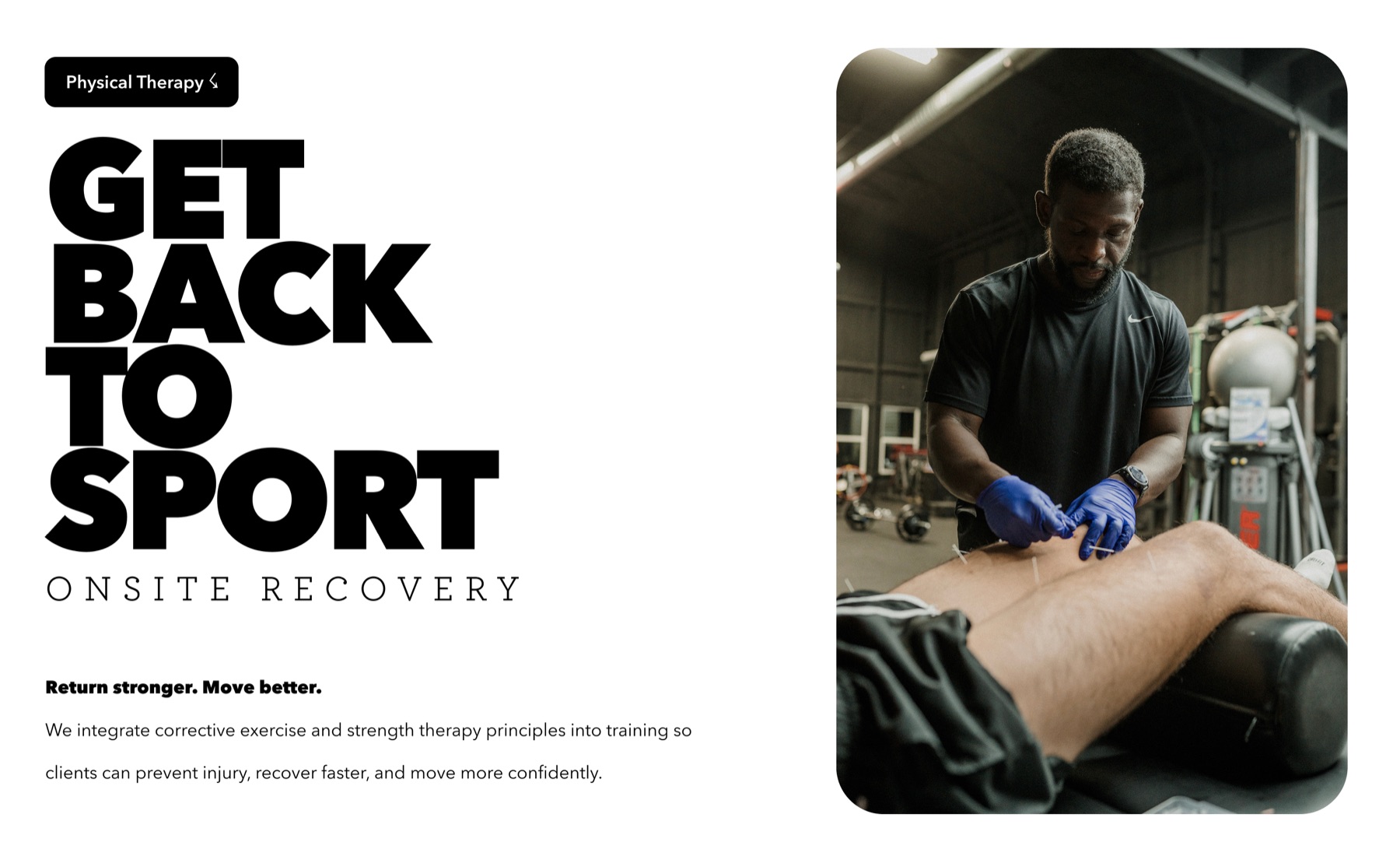
Dashboard, trainer bios, and the program list. Each trainer expands to specialties and certifications. The programs run from strength and speed work to onsite physical therapy, prenatal fitness, and Combine prep.
Run It From the Floor
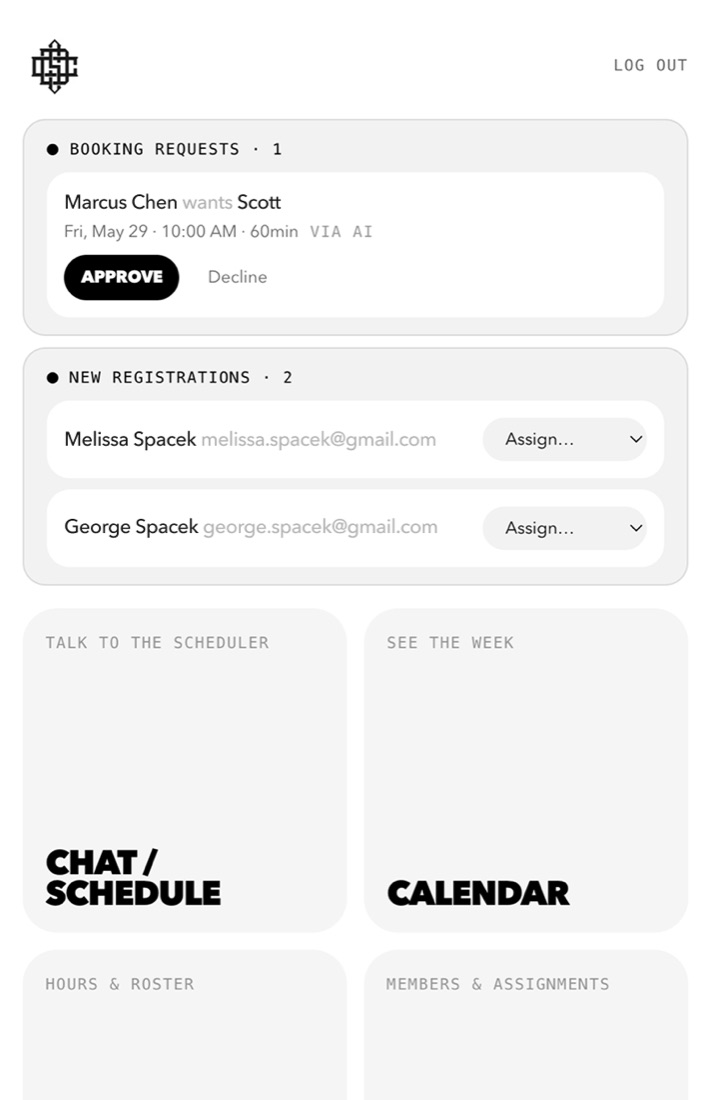
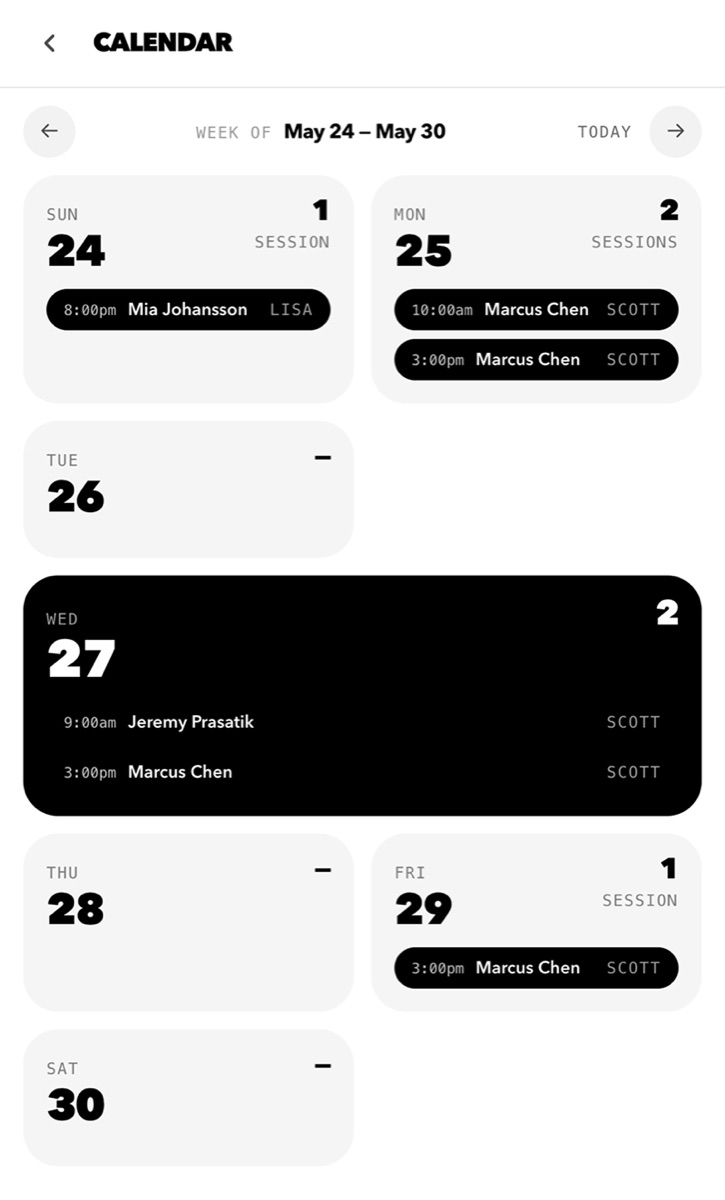
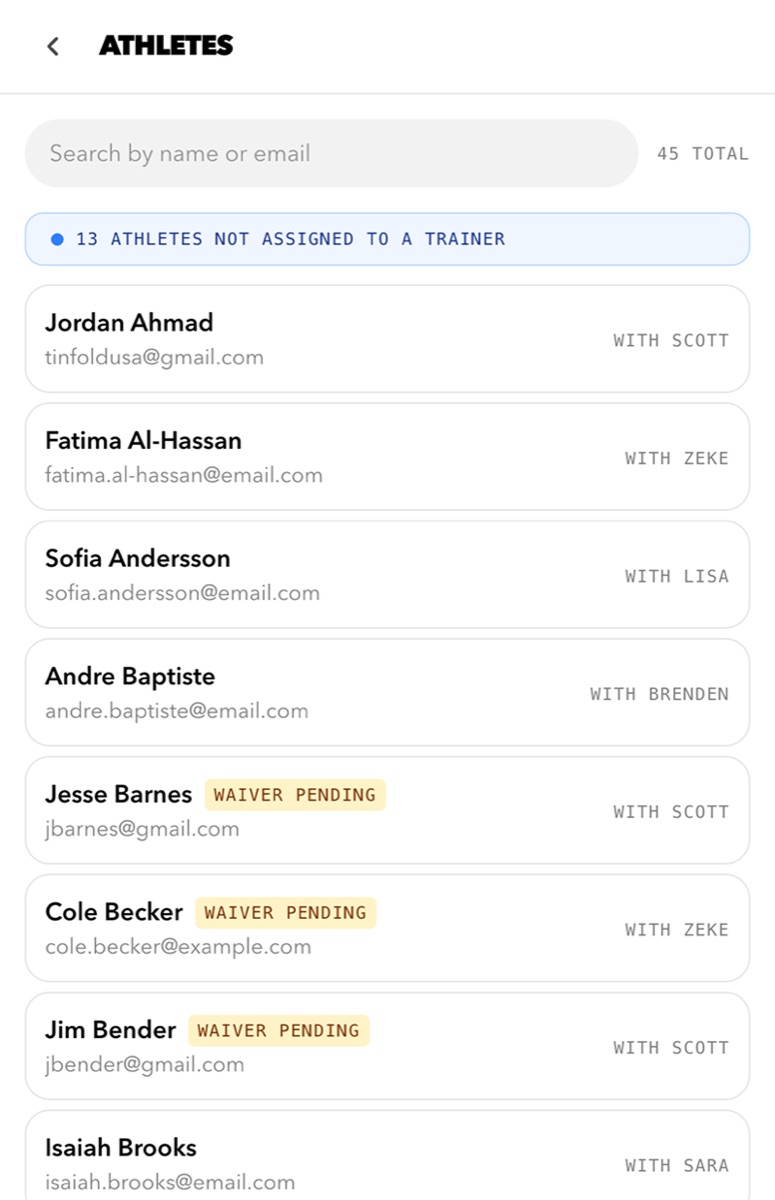
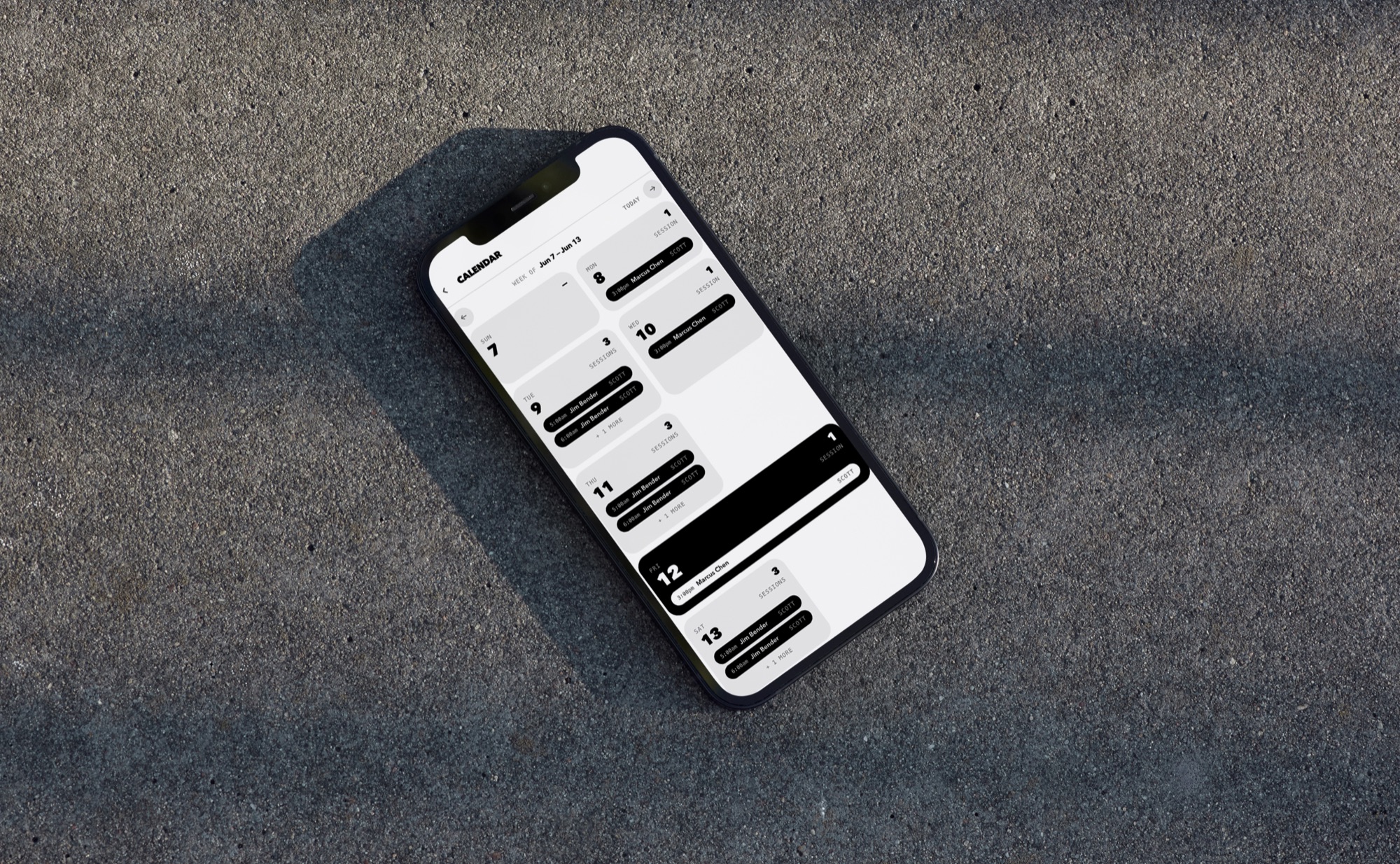
The owner side is built for one person managing a packed week from their phone, between sessions, on the gym floor.
The queue where every request lands, a week calendar with session density per day, and a member list flagging waiver and trainer-assignment status.


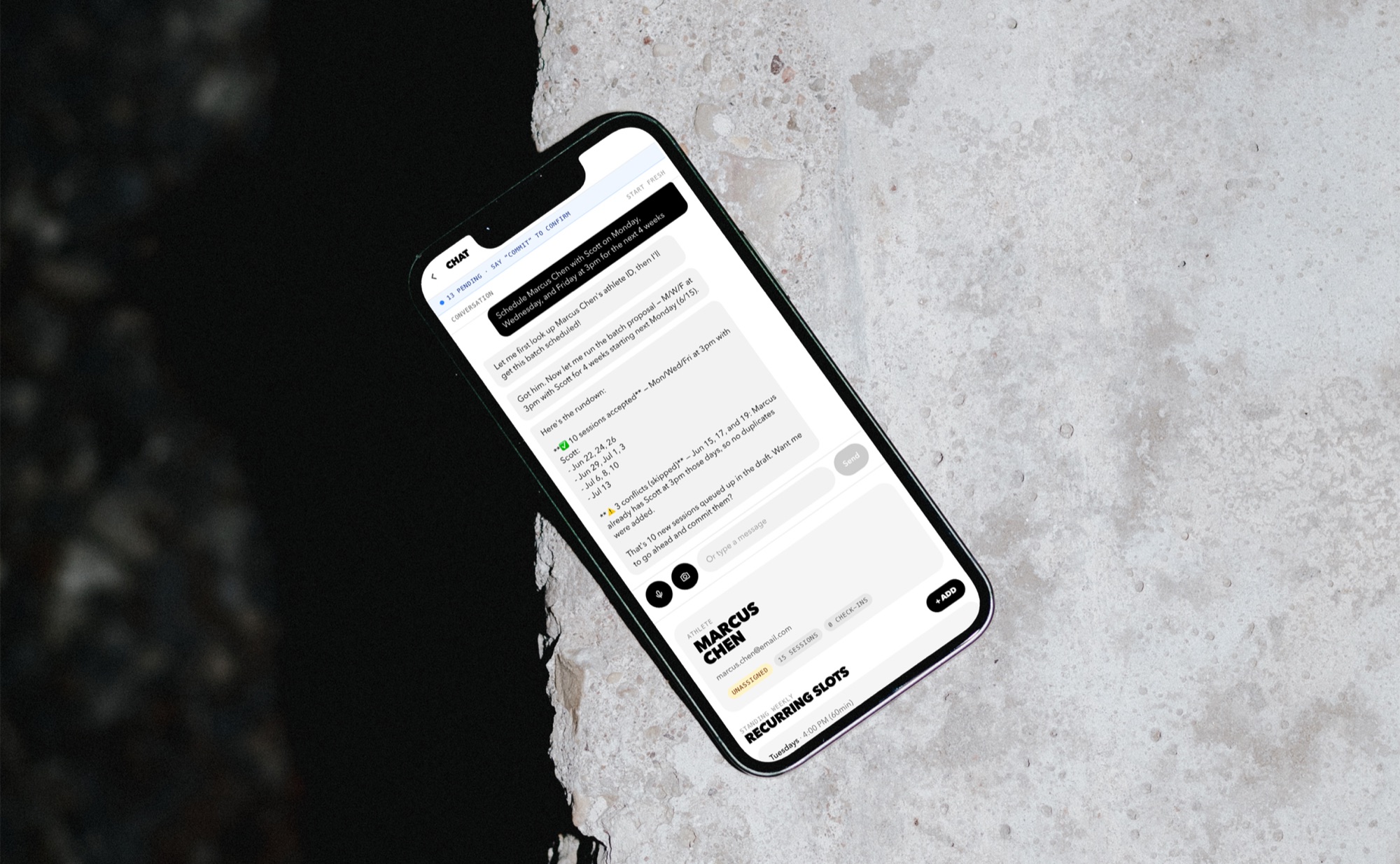
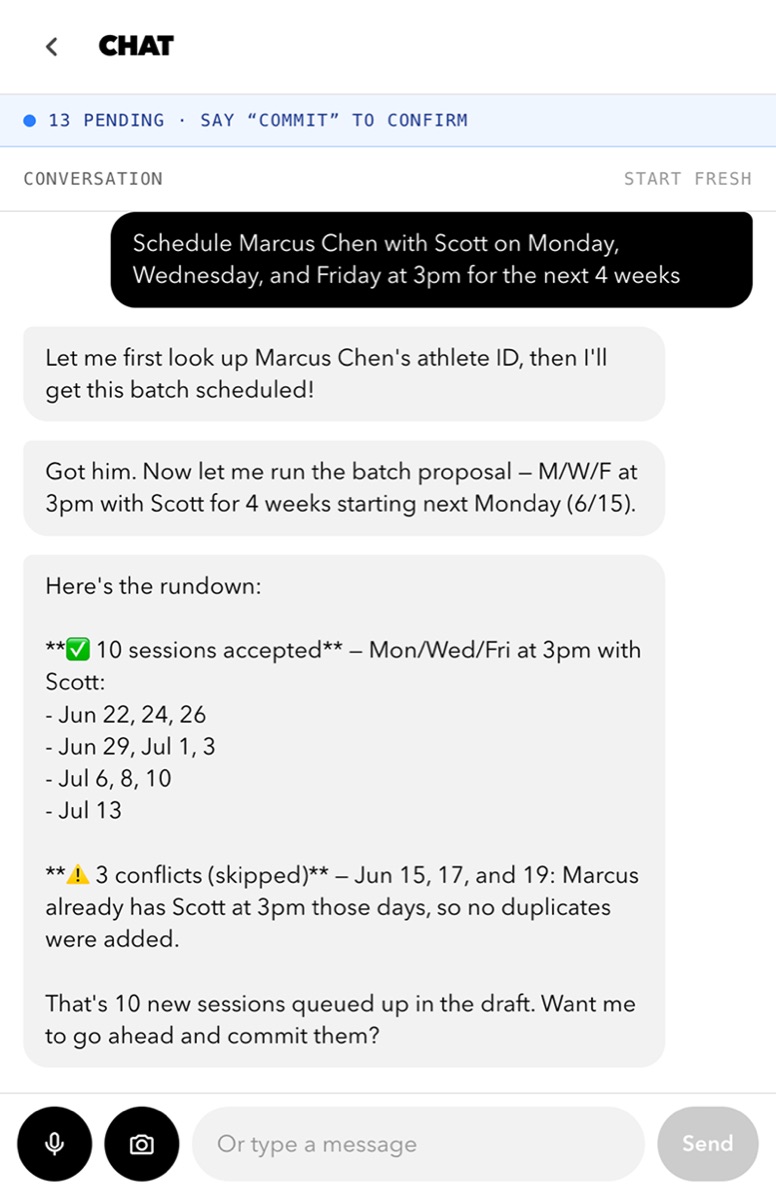
The owner can say a whole week out loud: schedule Marcus with Scott every Monday, Wednesday, and Friday at 3pm for a month. The scheduler proposes the batch, accepts the ten clean slots, flags the three it skipped for conflicts, and waits for a "commit" before a single session lands.

Back of house. Front and center.

Black, White, and Loud
A palette with no color in it, one type family doing all the work, and photography shot on the actual gym floor. The kit holds the same at every scale.
Chromatic brand circle
Ground
#000000
Type, structure
Ink
#141414
Dark surfaces
Steel
#8E8E8E
Labels, secondary
Mist
#E6E6E6
Cards, dividers
Paper
#FFFFFF
Ground, negative space
Brand philosophy
Pure black for type and structure, pure white for the ground, and a short ramp of greys for everything between. No accent color, because the photography and the weight of the type bring all the contrast the brand needs.
Type is mostly one family. Avenir Next runs the brand voice: Heavy for the wordmark and section heads, Demi Bold for subheads and CTAs, Medium for the body. A monospace sits underneath for the technical labels, the MCP URLs and session times. Weight and contrast do the job a second color usually would.
Avenir Next Heavy Wordmark & headlines
The heaviest weight, set at poster scale for the DALLAS SPORT COLLECTIVE wordmark and the section heads. The loudest the system gets.
Avenir Next Demi Bold Subheads & CTAs
One step down for subheads, callouts, and buttons. Structural weight that anchors a layout without shouting over the wordmark.
Avenir Next Medium Body & UI
The workhorse. Session details, trainer bios, running copy, interface text. Quiet enough to let the photography lead.
Mono Labels & data
A monospace under the Avenir for the technical labels and data fields: MCP SERVER URL, session times, the back-end voice surfacing in the UI.
DALLAS SPORT
Wordmark & headlines
Ground · #000000
Schedule by Chat
Subheads & CTAs
Ink · #141414
Train. Strength. Community.
Body & UI
Steel · #8E8E8E
MCP SERVER URL
Labels & data
Mist · #E6E6E6


100+
Athletes
Up from a handful
11
MCP tools
Schedule, trainers, booking
6
Trainers
One shared calendar
2
TX locations
Frisco HQ on the way
Live at the Gym
Most AI integration work this year is happening inside companies with platform teams. This one runs for a gym with six trainers.
The protocol does not care how big the business is. That might be the most useful thing about it.
Services
Web Design
Product Design
AI Integration
Full-Stack Engineering
Stack
Next.js
Vercel
Model Context Protocol
OAuth 2.0
Claude + ChatGPT
Links
The platform is live. Athletes sign in and book, the owner approves from a queue or just says the week out loud, and a connected Claude reads the schedule as it actually is.
The scheduling used to be the part nobody saw: texts, notes, a spreadsheet, the after-hours work that kept the training on time. Now it is the most modern thing the gym owns. The back office became the front door, and all of it connects.