Hill Country Kitchen
Four materials. One room. Every surface, fixture, and finish selected as part of a unified system where vintage warmth meets modern precision.
Field Interior Design Kitchen Design Material Specification
Author Jeremy Prasatik Published: 2023 Status: Complete
Classification Interior Design Kitchen Design Material Specification Custom Millwork
Abstract
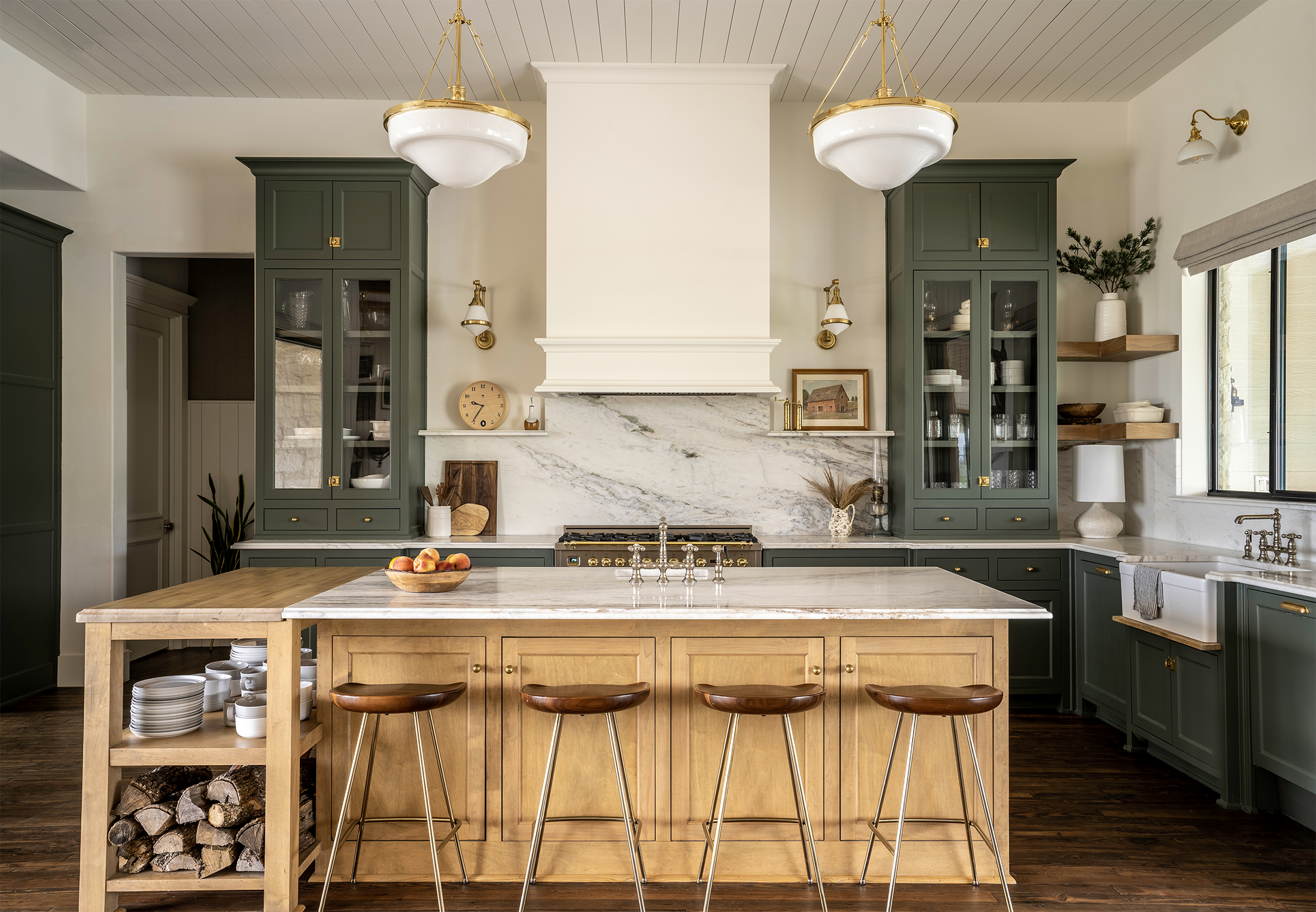
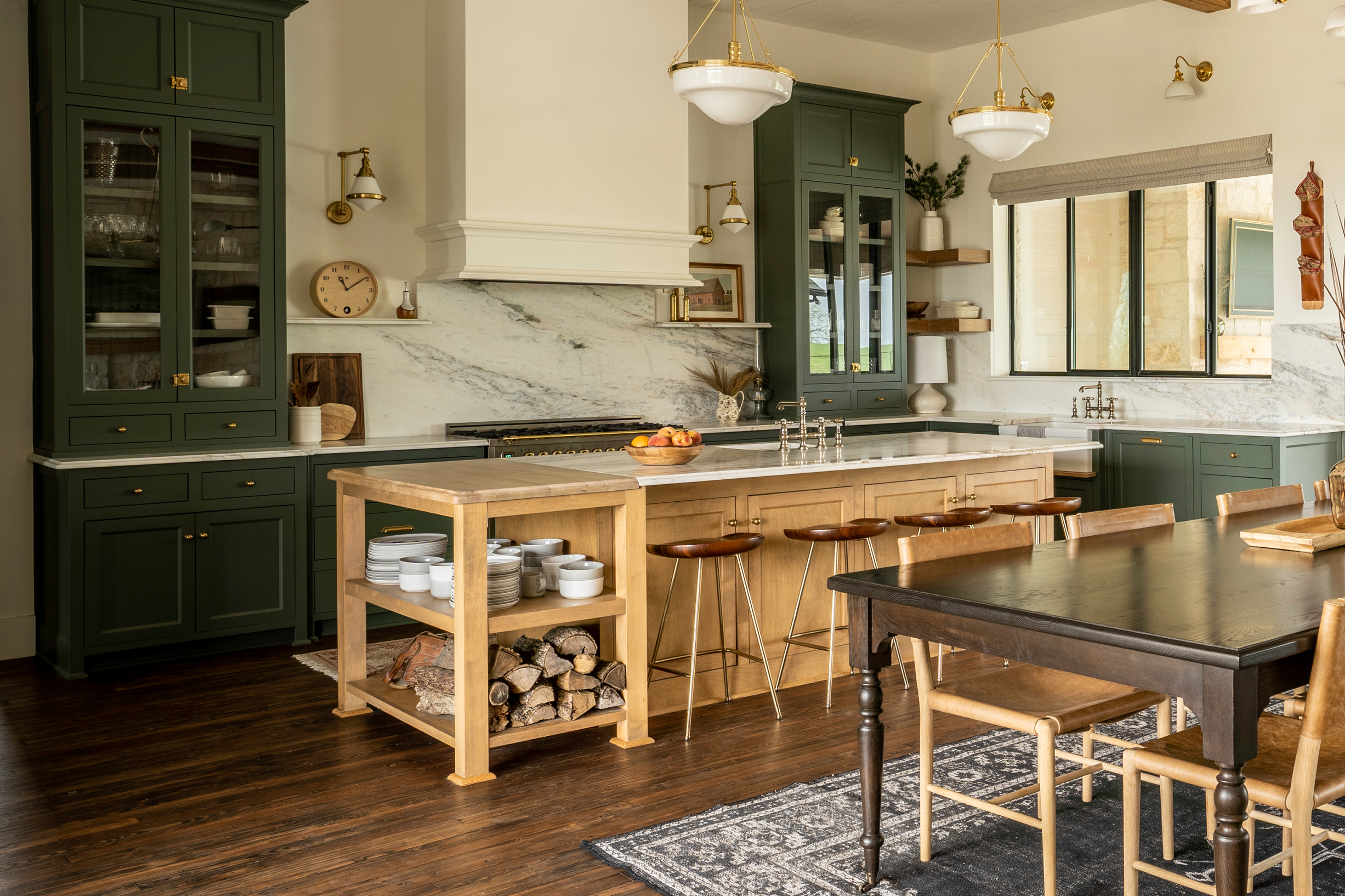
A kitchen designed the way a product gets designed. The material palette is the design system. Sage green sets the dominant surface. Raw white oak provides the warm counterpoint. Calacatta marble handles the work surfaces and backsplash. Unlacquered brass connects every touchpoint. Four finishes applied consistently across every cabinet face, countertop, and piece of hardware in the room.
The style mixing is deliberate. Shaker-profile cabinet doors reference traditional American kitchens. Steel-frame windows and open shelving pull contemporary. Cremone bolts and schoolhouse pendants read European antique. A turned-leg dining table against leather safari chairs. None of these elements belong to the same era. They belong to the same room because the material palette holds them together.
The space functions as the central hub of a Texas Hill Country home. Cooking, gathering, working. The island anchors the room. Open shelving at one end, seating at the other, marble work surface running the full length. Every decision optimized for how a family actually uses a kitchen, not how one photographs.
Four Finishes. One Vocabulary.
The palette was locked before a single cabinet got drawn. Sage green, white oak, Calacatta marble, unlacquered brass. Every specification traces back to one of these four. No exceptions. No accent materials. No tile backsplash, no stainless pulls, no painted island.
Constraint at the material level works the same way it works in any design system. Fewer variables means stronger cohesion. A room with twelve finishes reads as decorated. A room with four reads as designed. The limitation forced every surface to carry more visual weight, and the relationships between materials became the entire aesthetic.
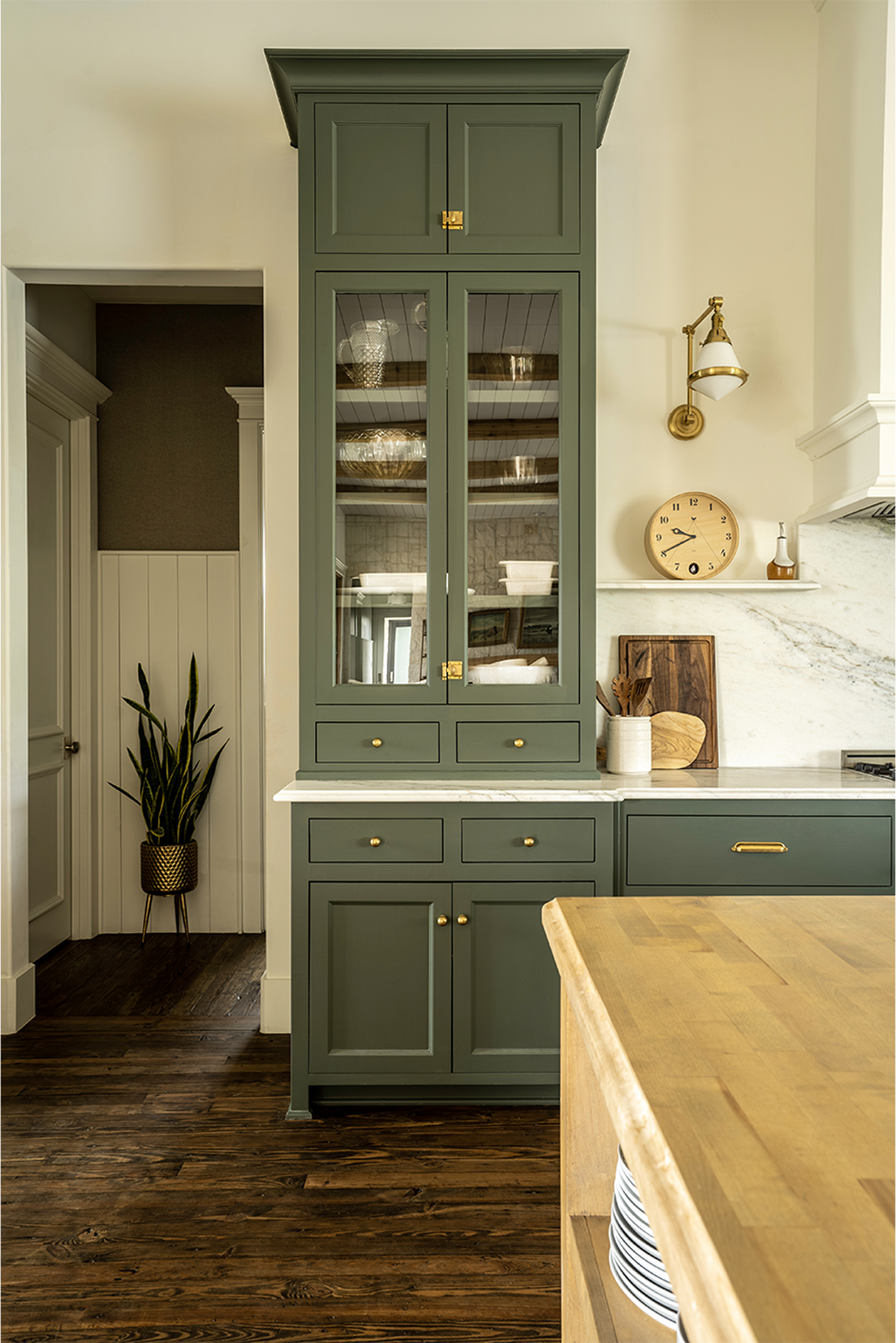
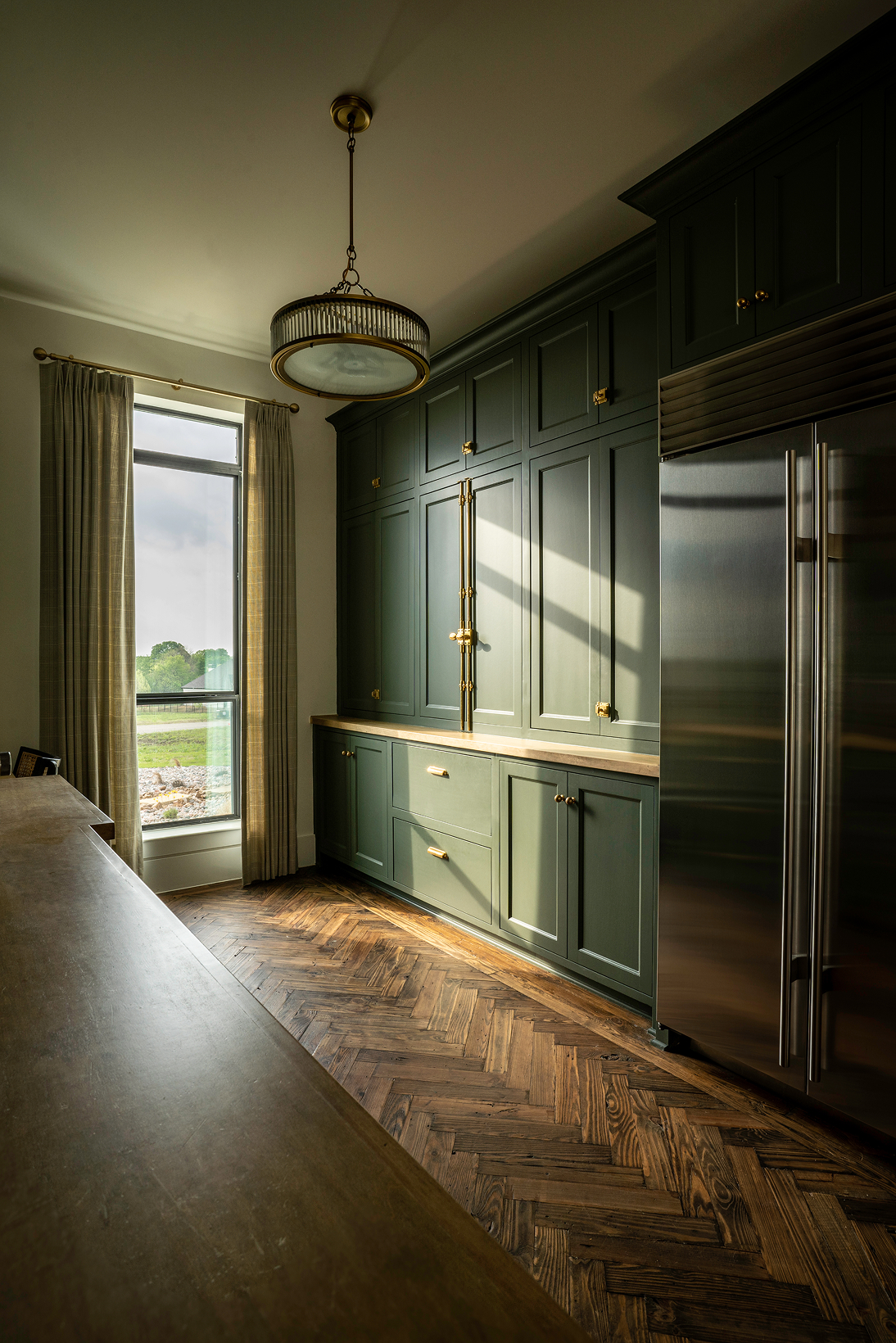
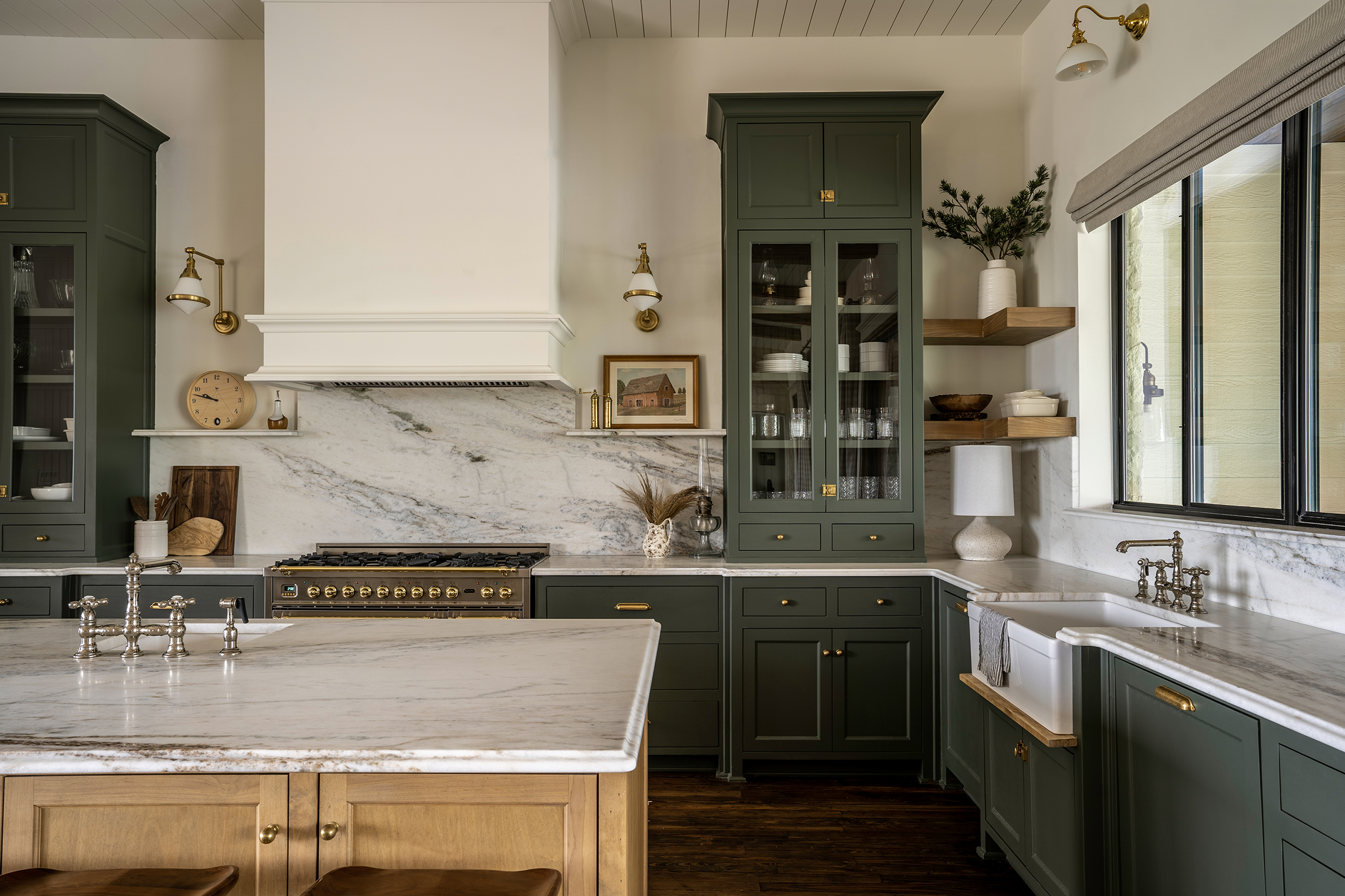
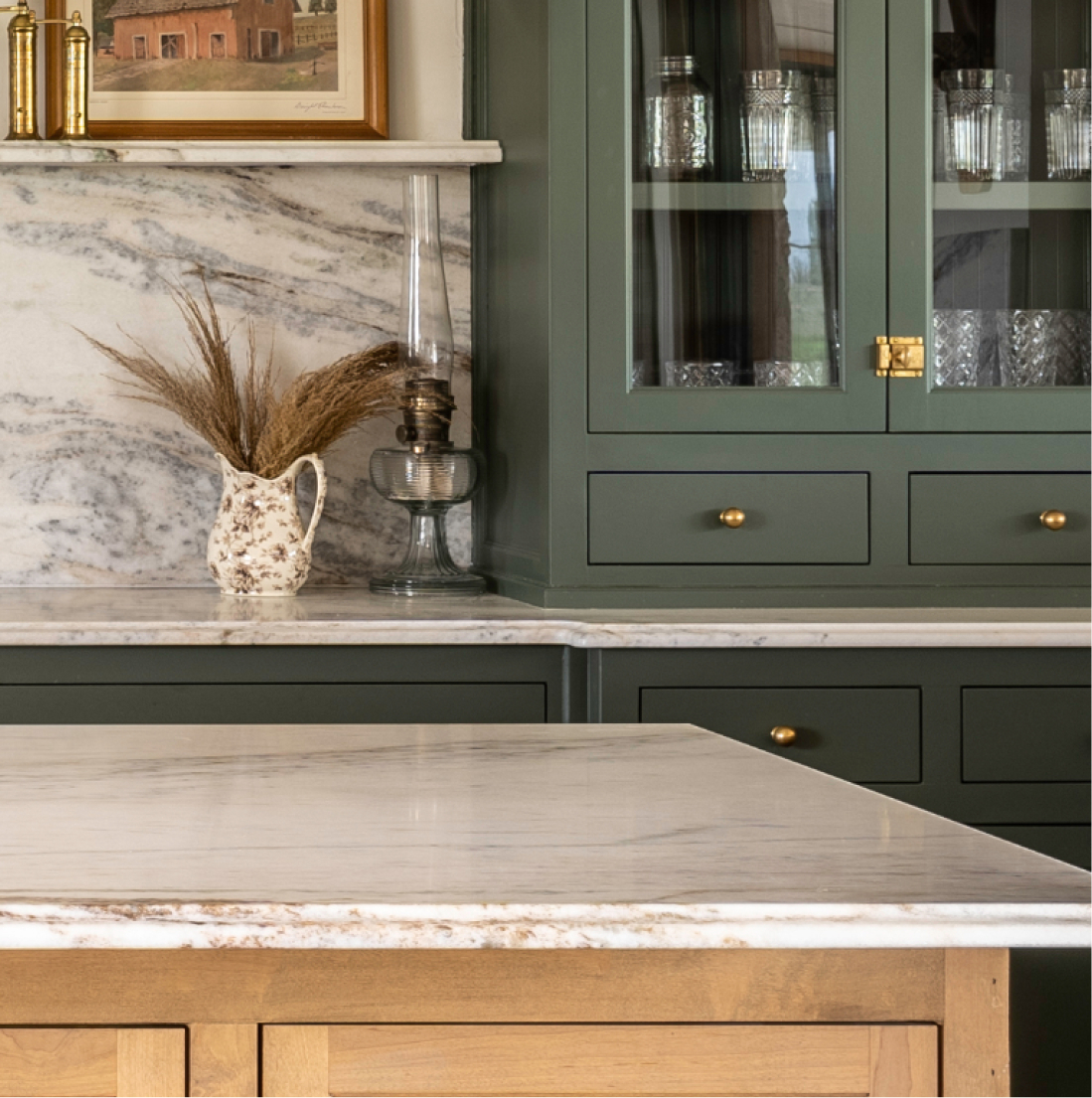
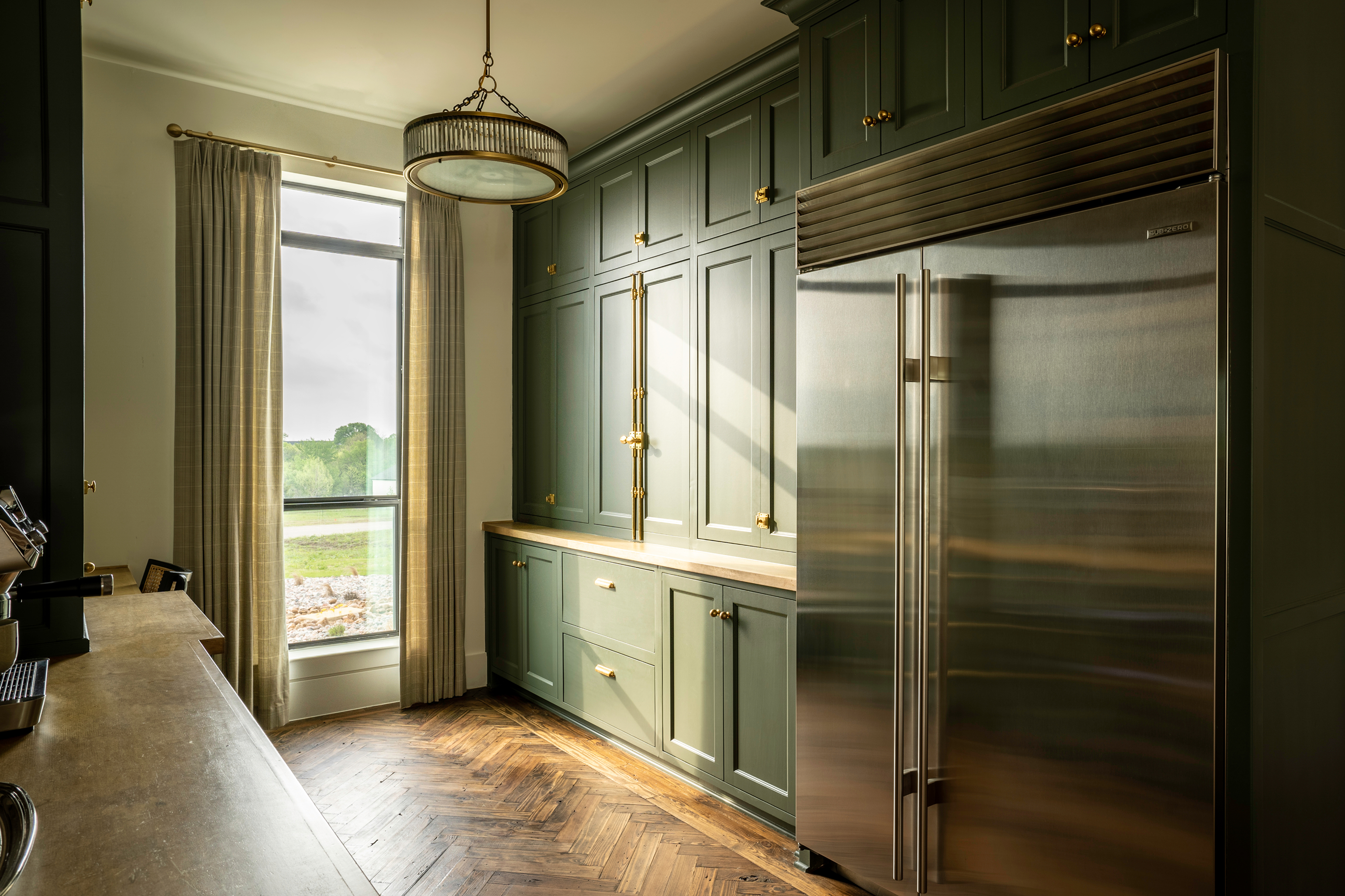
The cabinet color sets the room's identity. A muted sage with enough gray to read sophisticated, enough green to read alive. Applied floor to ceiling on the perimeter: base cabinets, uppers, glass-front display, the range hood surround, the refrigerator panel, the pantry wall. The color doesn't compete with the marble or the brass. It recedes just enough to let the textures work.
The finish is matte. Satin would have pushed the cabinets toward contemporary. Gloss would have fought the raw oak. Matte lets the shaker profiles cast soft shadows and keeps the room feeling grounded rather than polished.
The island is raw white oak. Unsealed. The grain is visible. The end-grain on the open shelving shows the growth rings. This is the warmest element in the room and the most honest. It ages. It darkens. It marks. That's the point.
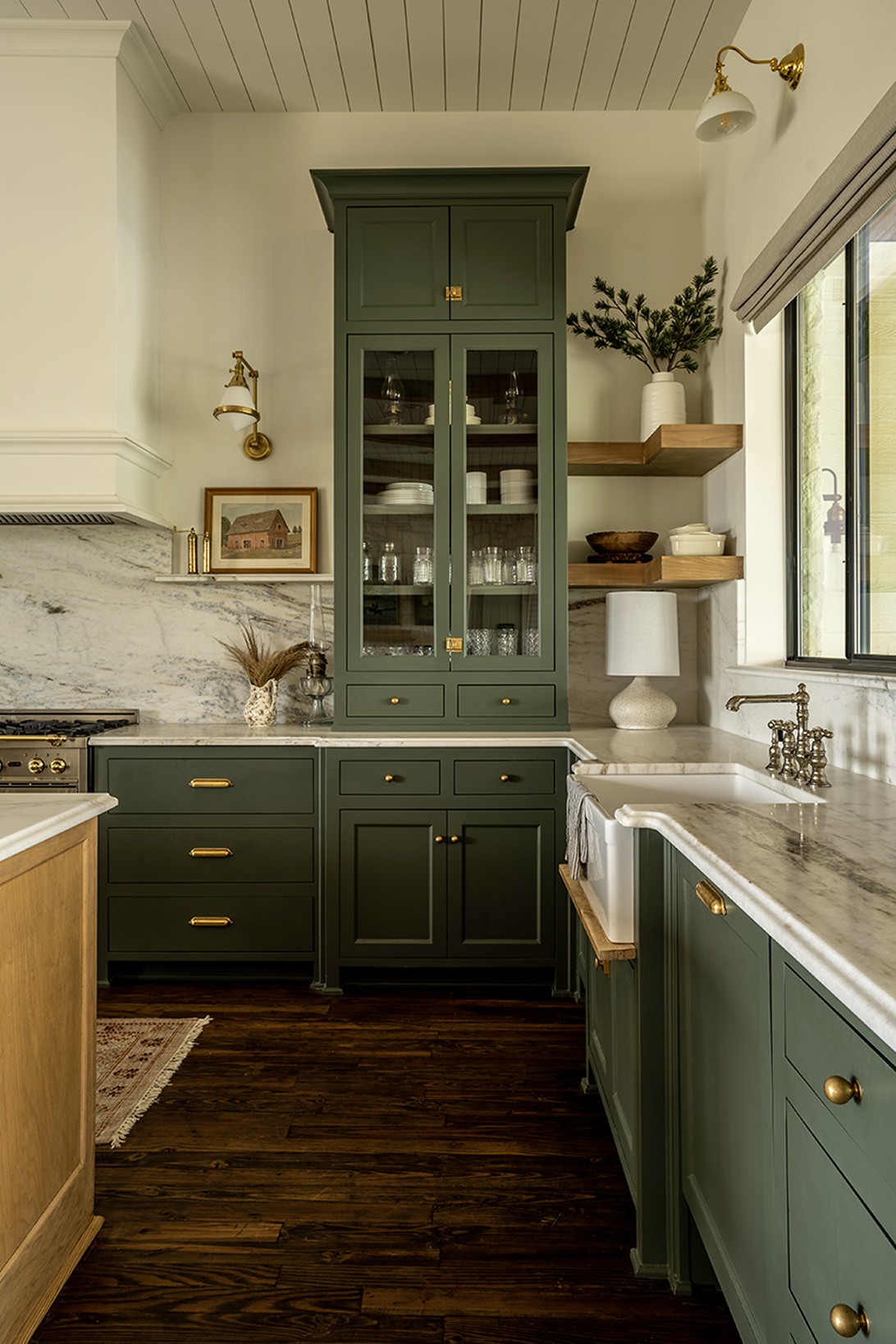
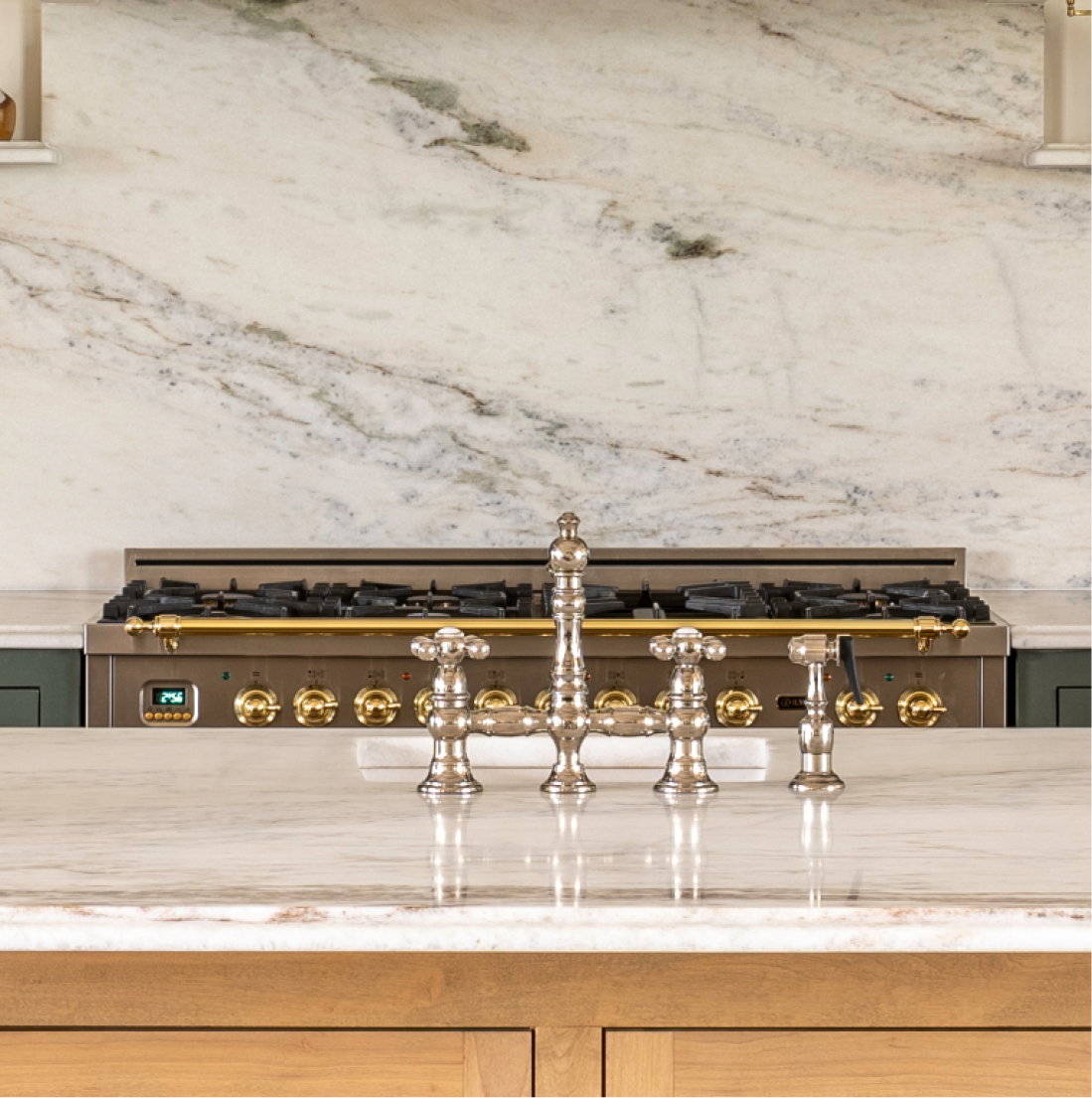
Calacatta marble runs the perimeter countertops and the full backsplash behind the range. Gray and gold veining against a warm white base. The marble does the visual work of separating the green cabinetry from the white walls. It's the transition material. Where oak meets green, marble mediates.
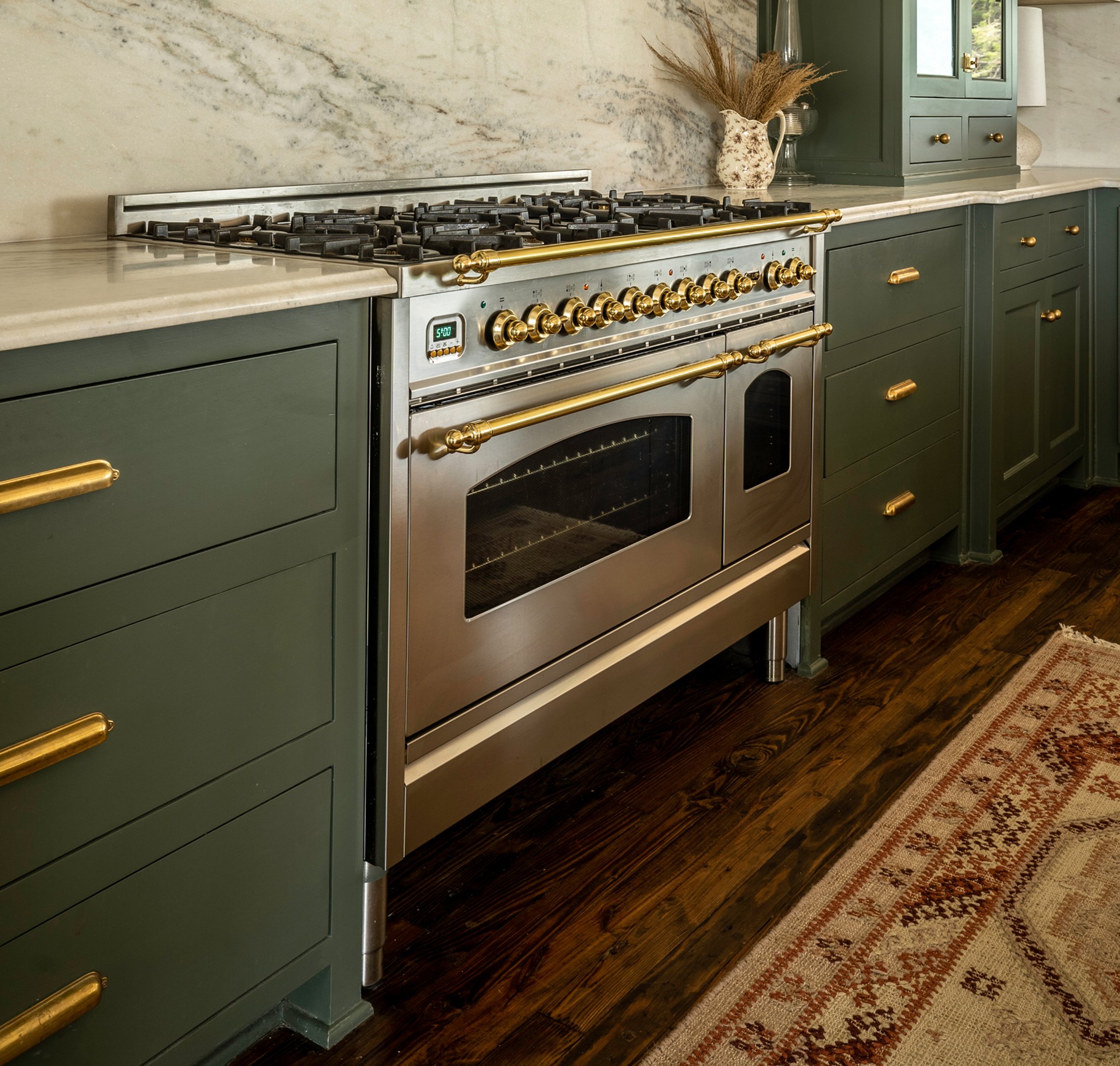
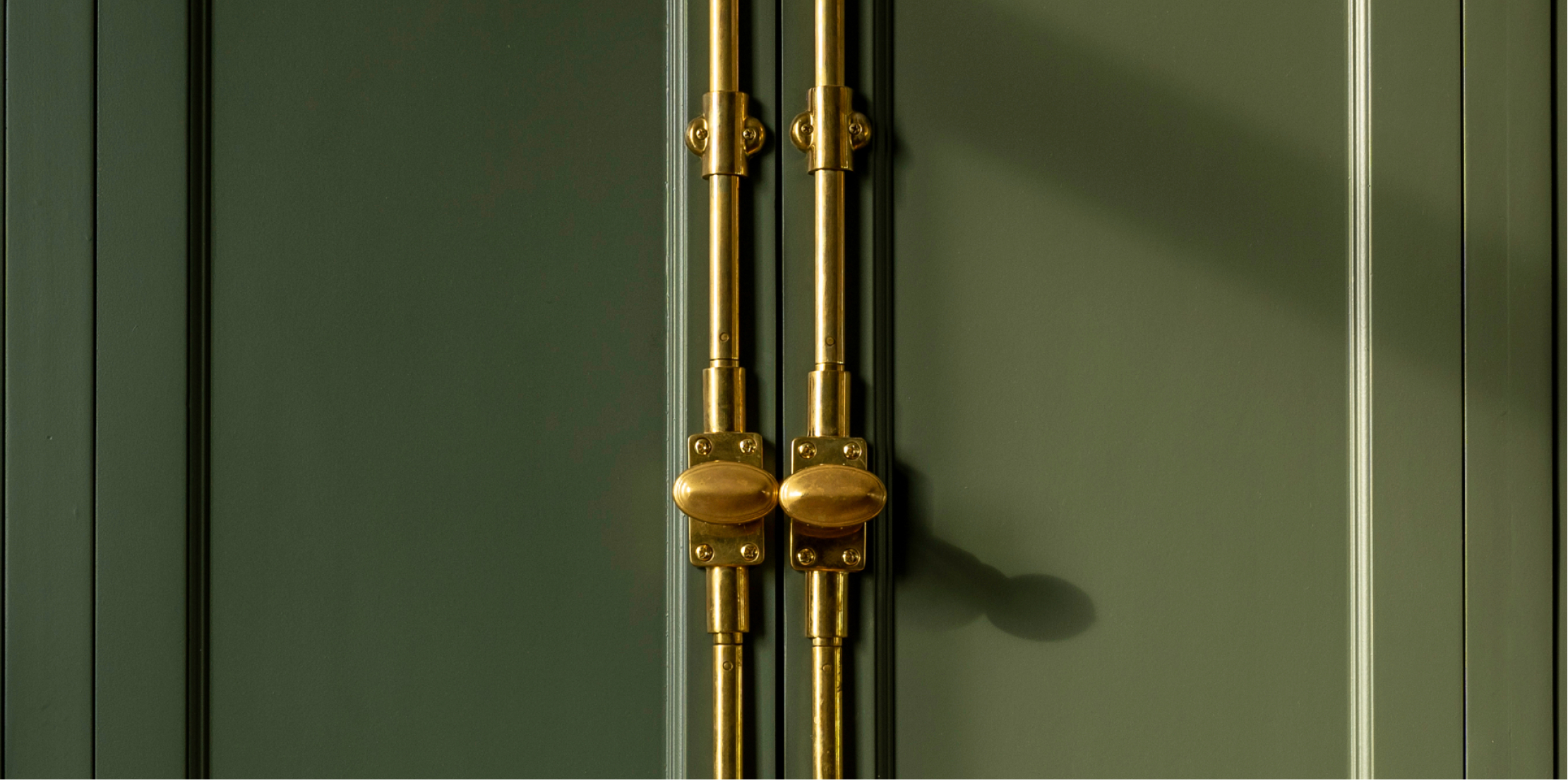
Every metal touchpoint is the same finish. Cabinet pulls. Cremone bolts on the tall pantry doors. The bridge faucet. Pendant light fixtures. Sconce arms. Range knobs and trim. Even the bar stool frames pick up the brass tone.
Unlacquered means the brass patinas. It darkens at the touchpoints and stays bright where hands don't reach. After a year, the hardware tells you exactly how the kitchen gets used. The pulls on the most-opened drawers develop the deepest color. The decorative bolts stay pale. Functional archaeology built into the material choice.
Sage Green
The cabinet color sets the room's identity. A muted sage with enough gray to read sophisticated, enough green to read alive. Applied floor to ceiling on the perimeter: base cabinets, uppers, glass-front display, the range hood surround, the refrigerator panel, the pantry wall. The color doesn't compete with the marble or the brass. It recedes just enough to let the textures work.
The finish is matte. Satin would have pushed the cabinets toward contemporary. Gloss would have fought the raw oak. Matte lets the shaker profiles cast soft shadows and keeps the room feeling grounded rather than polished.
White Oak + Marble
The island is raw white oak. Unsealed. The grain is visible. The end-grain on the open shelving shows the growth rings. This is the warmest element in the room and the most honest. It ages. It darkens. It marks. That's the point.
Calacatta marble runs the perimeter countertops and the full backsplash behind the range. Gray and gold veining against a warm white base. The marble does the visual work of separating the green cabinetry from the white walls. It's the transition material. Where oak meets green, marble mediates.
Unlacquered Brass
Every metal touchpoint is the same finish. Cabinet pulls. Cremone bolts on the tall pantry doors. The bridge faucet. Pendant light fixtures. Sconce arms. Range knobs and trim. Even the bar stool frames pick up the brass tone.
Unlacquered means the brass patinas. It darkens at the touchpoints and stays bright where hands don't reach. After a year, the hardware tells you exactly how the kitchen gets used. The pulls on the most-opened drawers develop the deepest color. The decorative bolts stay pale. Functional archaeology built into the material choice.


Shaker Profile. Brass at Every Touchpoint.
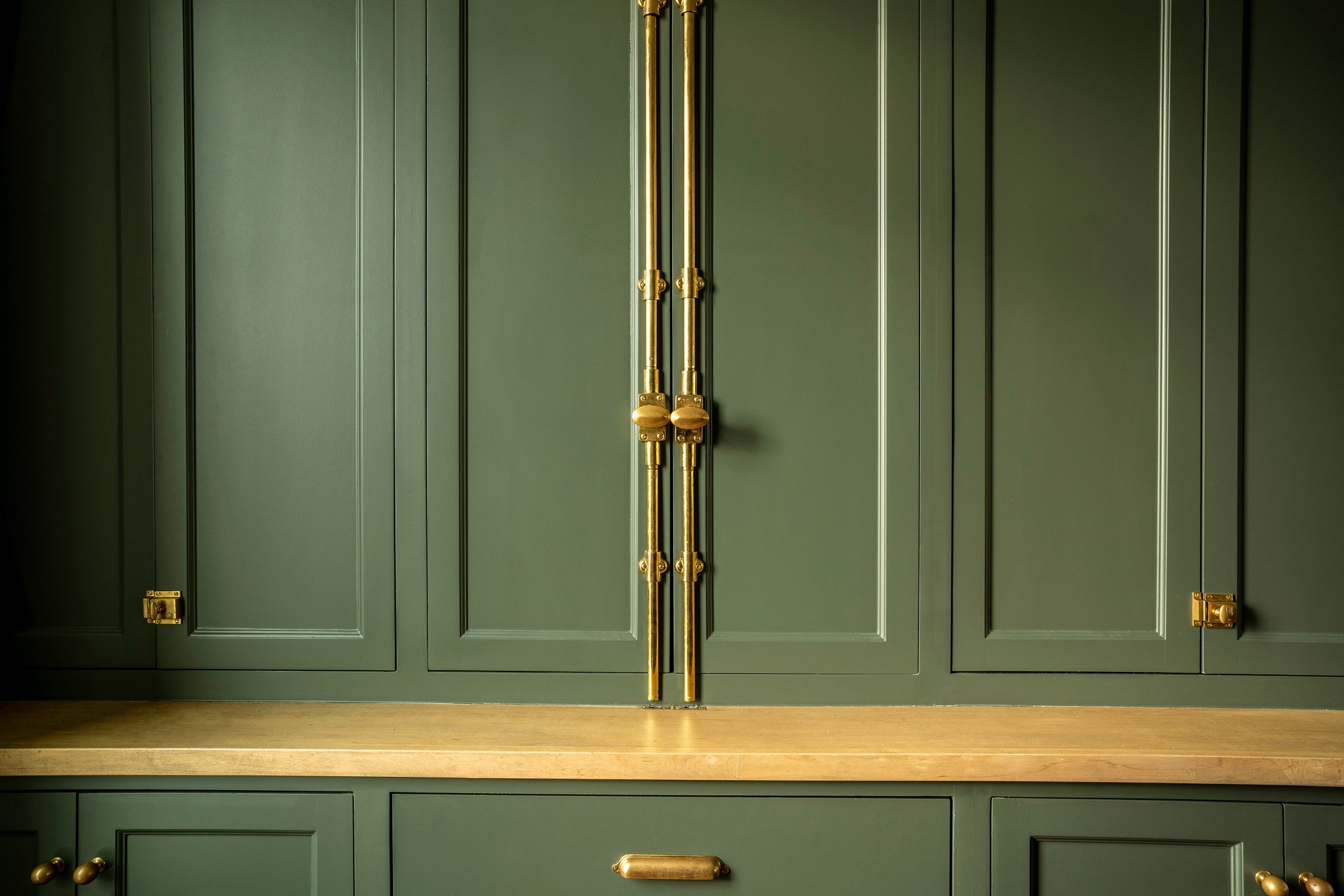
The cabinet program runs floor to ceiling on three walls. Base cabinets, upper glass-fronts, a built-in hutch flanking the range, full-height pantry storage with cremone bolt closures. The same sage green, the same shaker profile, the same brass hardware throughout. Repetition is the system.
Cremone bolts on the tall pantry doors are the signature hardware choice. A French mechanism on American shaker cabinets in a Texas kitchen. The style collision is intentional. The bolts add vertical visual interest to the tallest cabinet faces and give the pantry wall architectural presence that standard pulls would miss. They also function well. A single lever locks top and bottom simultaneously.


Every surface, a decision. Every finish, a relationship.
Raw Oak. The Room's Anchor.
The island is the primary interaction surface. Prep, cooking, eating, gathering, homework. It needed to handle all of it without looking like it was trying to handle all of it. Raw white oak solved the problem.
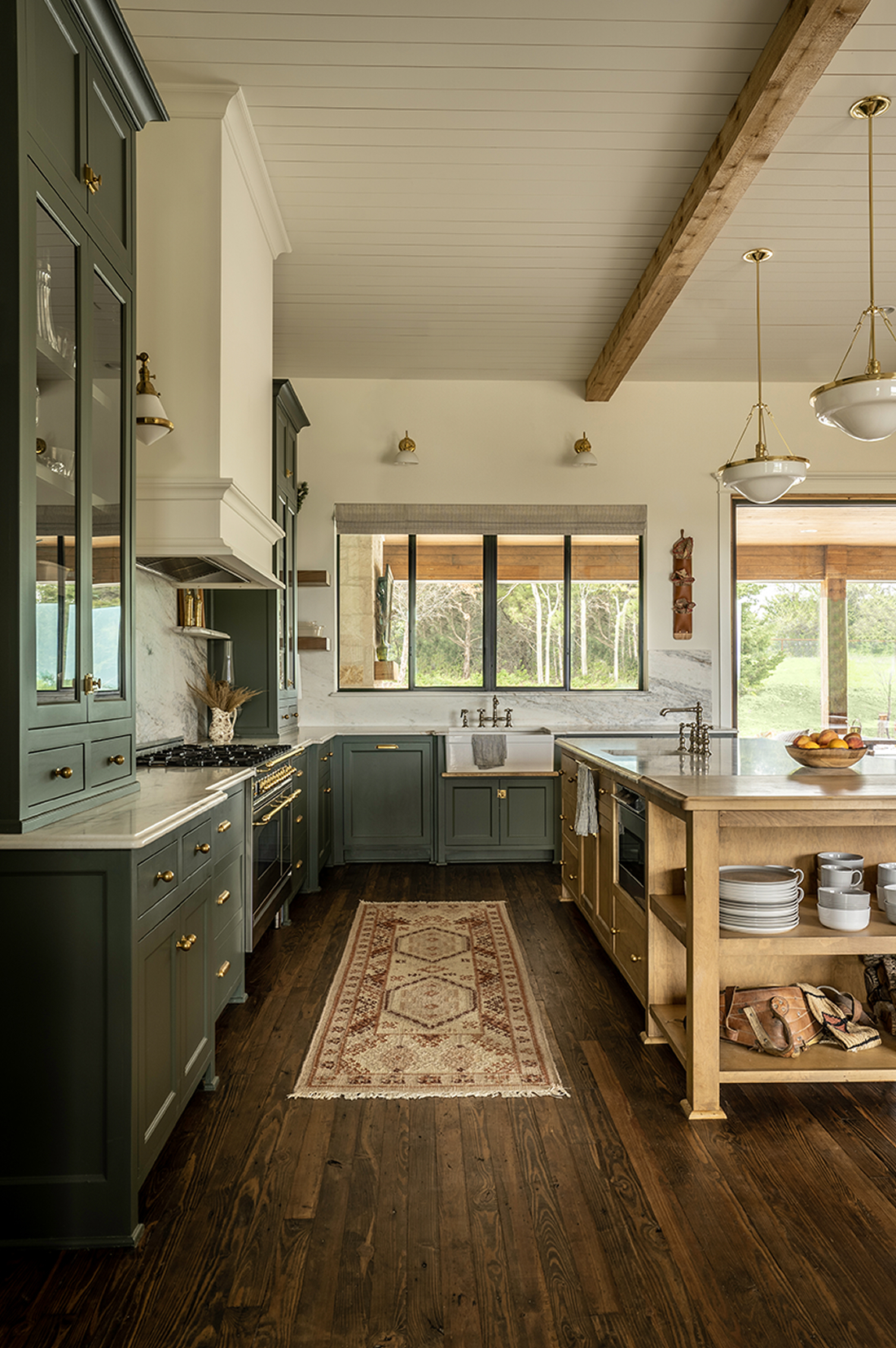
Open shelving on the working end holds plates and bowls within arm's reach of the dishwasher. A firewood cubby at the base adds texture and signals that this kitchen connects to the rest of the property. The marble top runs the full length, transitioning from food prep surface to bar seating without a material break. Four bar stools with brass-tone frames tuck under the overhang. The island reads as furniture rather than cabinetry. That distinction matters. Furniture invites interaction. Cabinetry stores things.
White oak, not stained, not sealed with polyurethane. A penetrating oil finish that lets the wood breathe and develop character over time. The grain is open. The color will shift from pale honey to deeper amber across years of use.
This was the riskiest material call in the kitchen. Raw wood in a wet environment invites concern. The response: this is Texas Hill Country, not a showroom. The island should look used. Water rings, knife marks, flour dust in the grain. The patina is the design intent.
The island sits centered in the room with circulation on all four sides. It's the first thing visible from the entry. The scale is generous. Eight feet of usable counter, open shelving visible from the dining side, seating for four on the bar side.
Every sight line in the kitchen crosses the island. From the range, you look over it to the windows. From the dining table, you look through it to the backsplash. The oak breaks up the green-and-marble perimeter and gives the eye a warm landing point at the center of every view.
The island has legs. Visible legs with open shelving between them. This is the detail that makes it read as a freestanding piece rather than a built-in. The perimeter cabinets are architecture. The island is furniture.
That distinction changes how people approach it. Guests lean on furniture. They sit around furniture. They set things on furniture without asking. A cabinet island with solid panels and a granite overhang creates a barrier. An oak table with open shelves creates an invitation.
The Oak Choice
White oak, not stained, not sealed with polyurethane. A penetrating oil finish that lets the wood breathe and develop character over time. The grain is open. The color will shift from pale honey to deeper amber across years of use.
This was the riskiest material call in the kitchen. Raw wood in a wet environment invites concern. The response: this is Texas Hill Country, not a showroom. The island should look used. Water rings, knife marks, flour dust in the grain. The patina is the design intent.
Spatial Anchor
The island sits centered in the room with circulation on all four sides. It's the first thing visible from the entry. The scale is generous. Eight feet of usable counter, open shelving visible from the dining side, seating for four on the bar side.
Every sight line in the kitchen crosses the island. From the range, you look over it to the windows. From the dining table, you look through it to the backsplash. The oak breaks up the green-and-marble perimeter and gives the eye a warm landing point at the center of every view.
Furniture vs. Cabinetry
The island has legs. Visible legs with open shelving between them. This is the detail that makes it read as a freestanding piece rather than a built-in. The perimeter cabinets are architecture. The island is furniture.
That distinction changes how people approach it. Guests lean on furniture. They sit around furniture. They set things on furniture without asking. A cabinet island with solid panels and a granite overhang creates a barrier. An oak table with open shelves creates an invitation.


Dark Table. Leather Chairs. A Different Temperature.
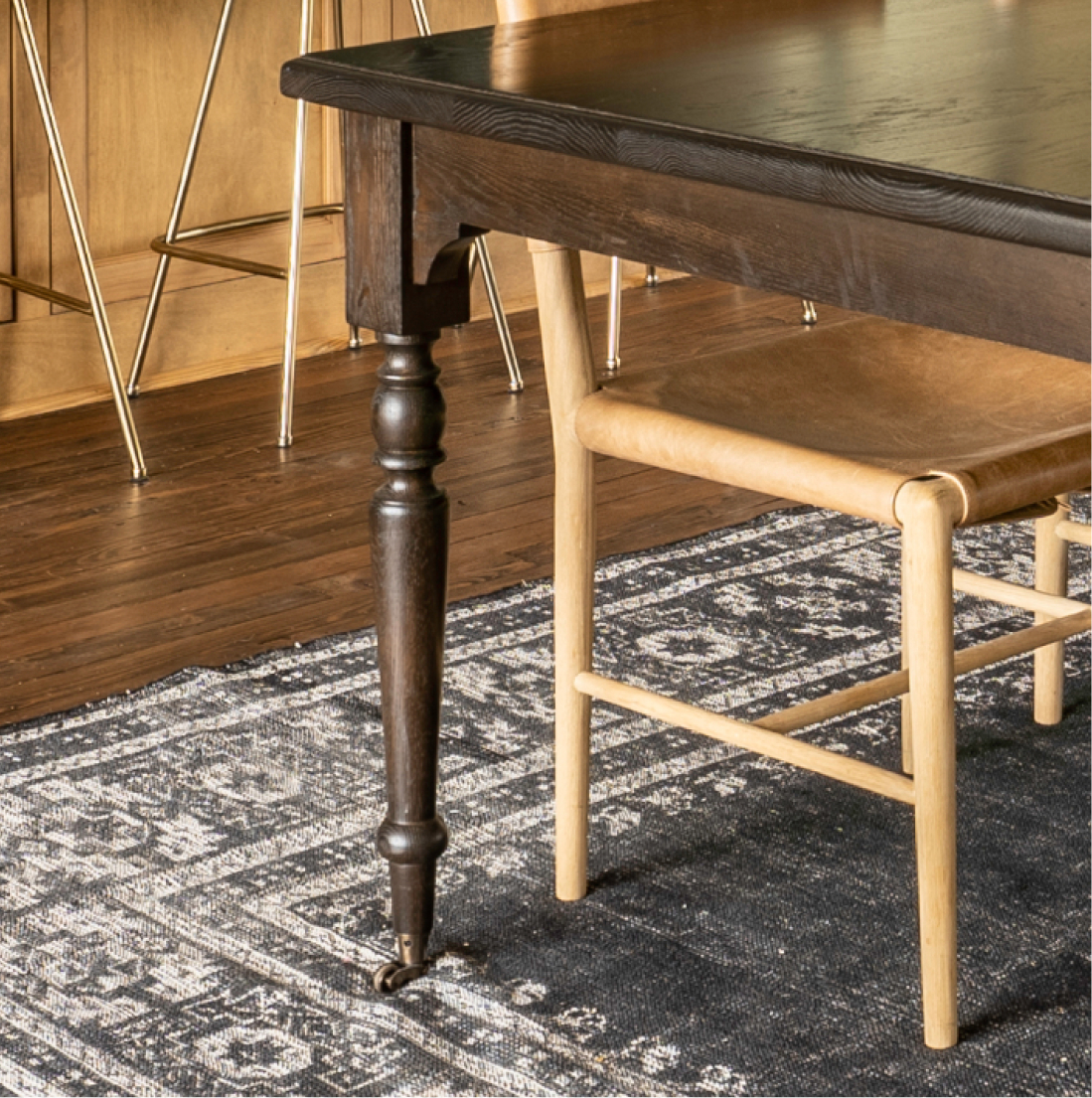
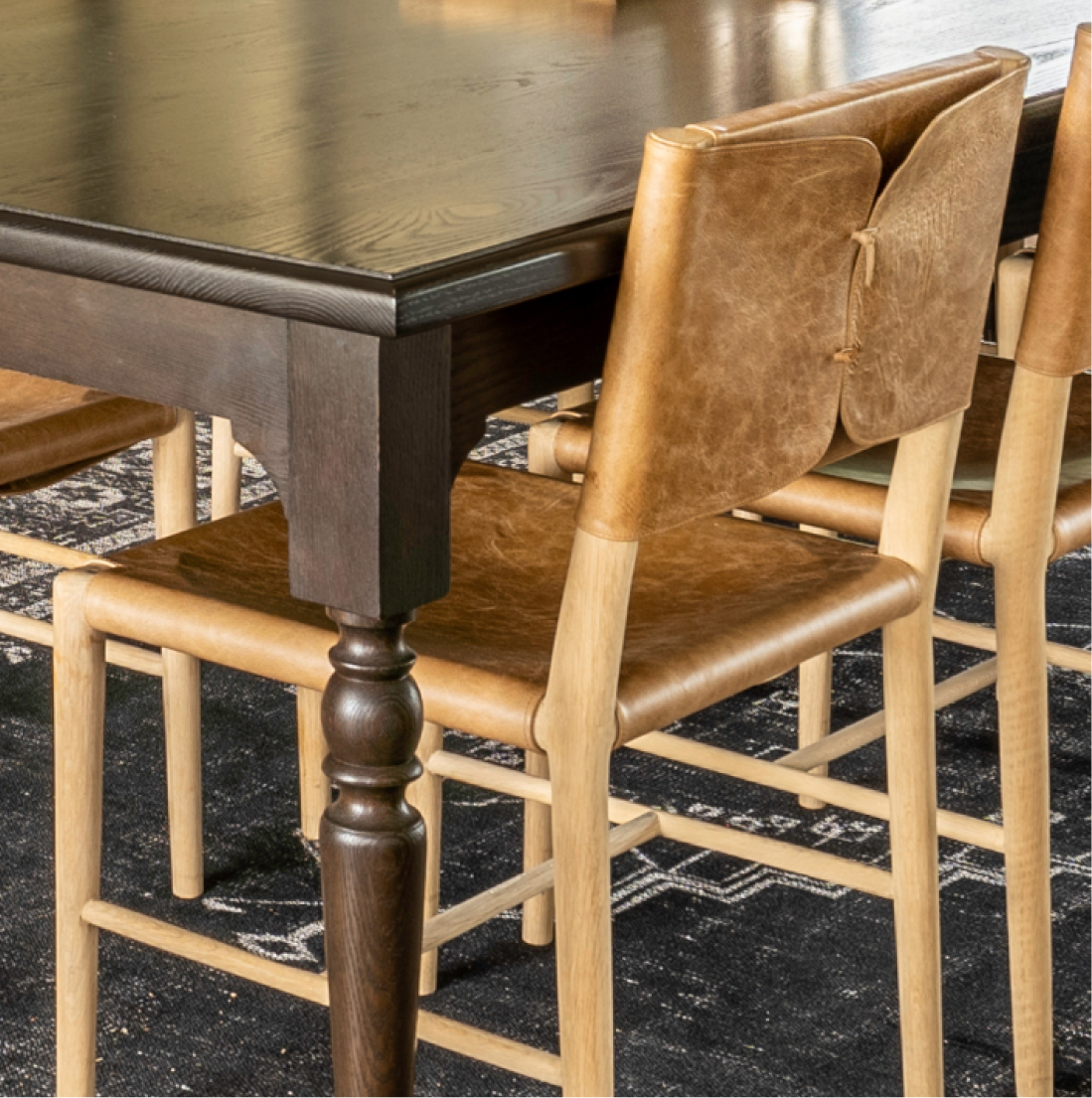
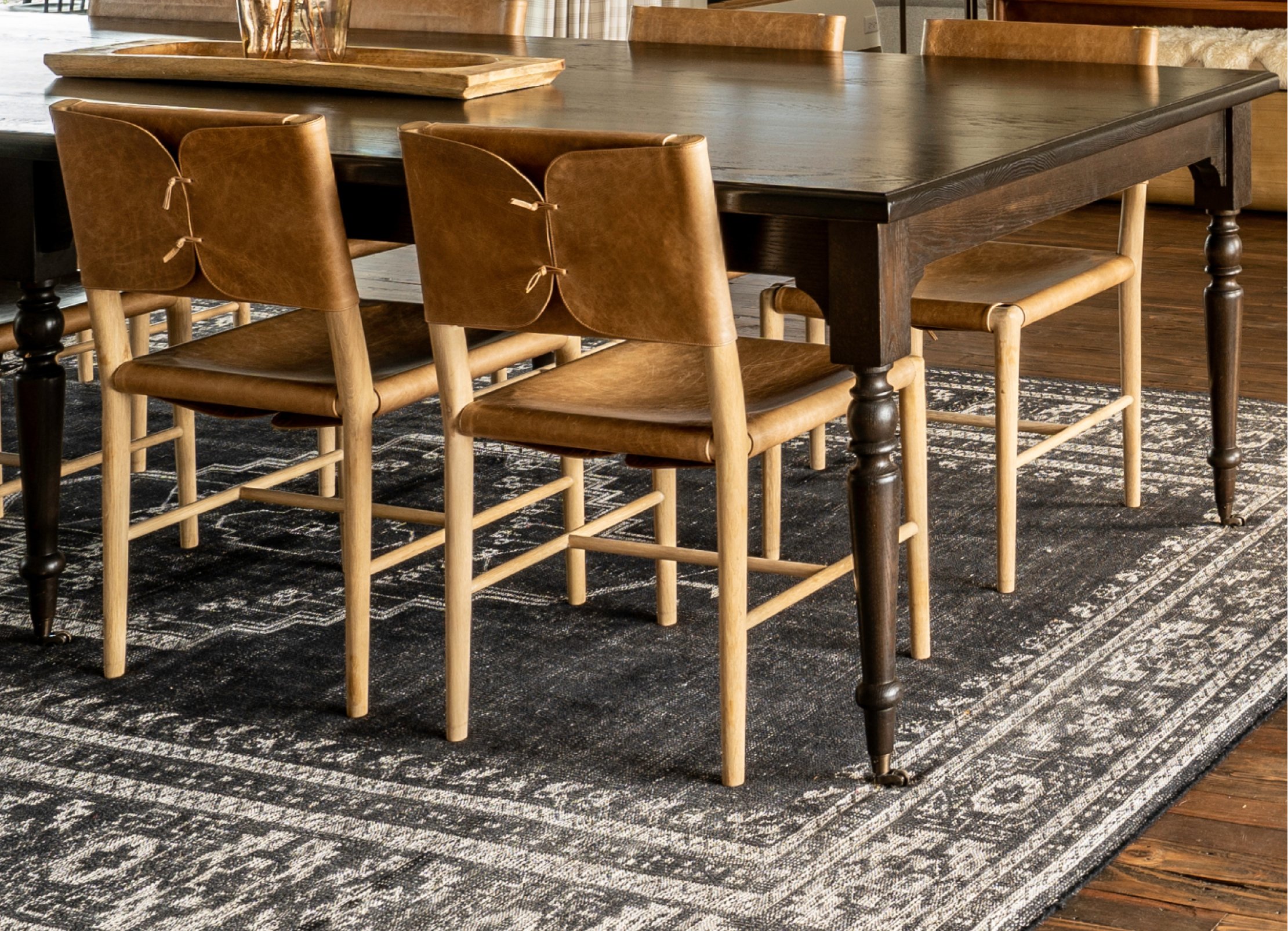
The dining area occupies the same open room but reads as its own zone. A dark-stained turned-leg table against the light oak and green of the kitchen. The material shift is abrupt and intentional. Different activity, different material mood.
Leather-and-oak safari chairs surround the table. The leather picks up the brass warmth. The oak frames reference the island wood. A dark patterned rug grounds the furniture group and separates it visually from the kitchen's hardwood floor. The dining zone borrows from the kitchen's vocabulary but speaks at a lower volume. Darker, quieter, more contained.


Designed the way a product gets designed.
Systems Thinking Applied to a Room
A kitchen where every specification traces back to the same four-material palette. The room holds together because the system holds together.
Services
Interior Design
Space Planning
Material Specification
Construction Documentation
Fixture Selection
Stack
AutoCAD
SketchUp
Adobe Creative Suite
Links
The same discipline that makes a digital design system work makes a room work. Limit the variables. Define relationships between elements. Apply them consistently. Let the constraints generate the aesthetic rather than fighting against them.
Four materials, repeated across every surface in the room. Sage green on the vertical planes. Marble on the horizontal. Oak at the center. Brass at every point of contact. The style mixing, shaker cabinets next to steel windows next to French hardware, holds together because the material system holds together. Different eras, same palette.
The kitchen functions as a hub. Cooking flows into gathering flows into working flows into eating. The spatial plan supports all of it without dedicated zones that go unused half the day. The island handles prep, serving, and seating simultaneously. The dining table sits close enough to the kitchen to stay connected, far enough to feel separate. UX for a room.