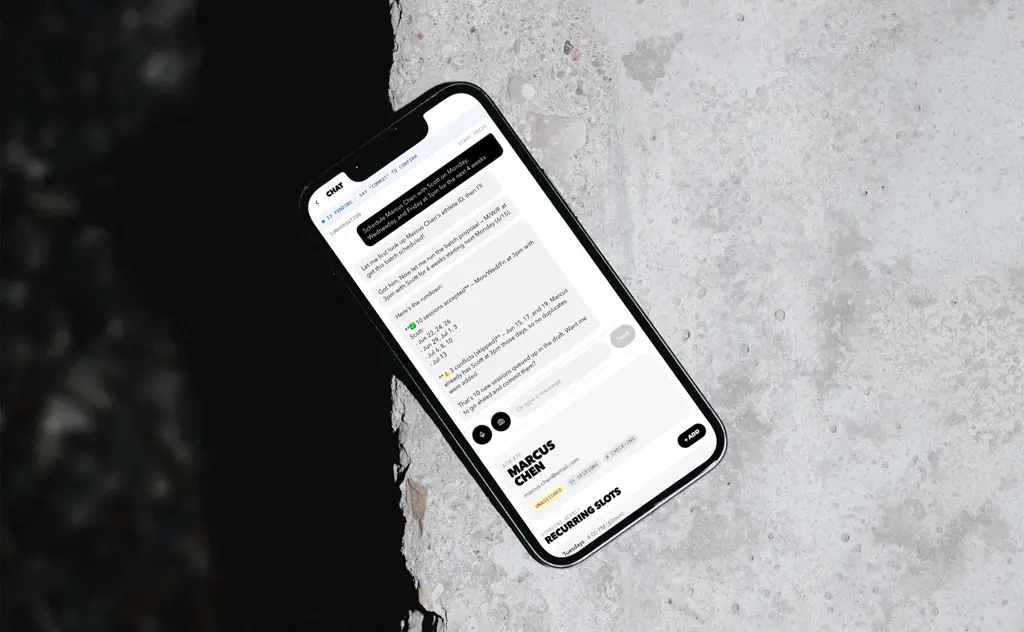
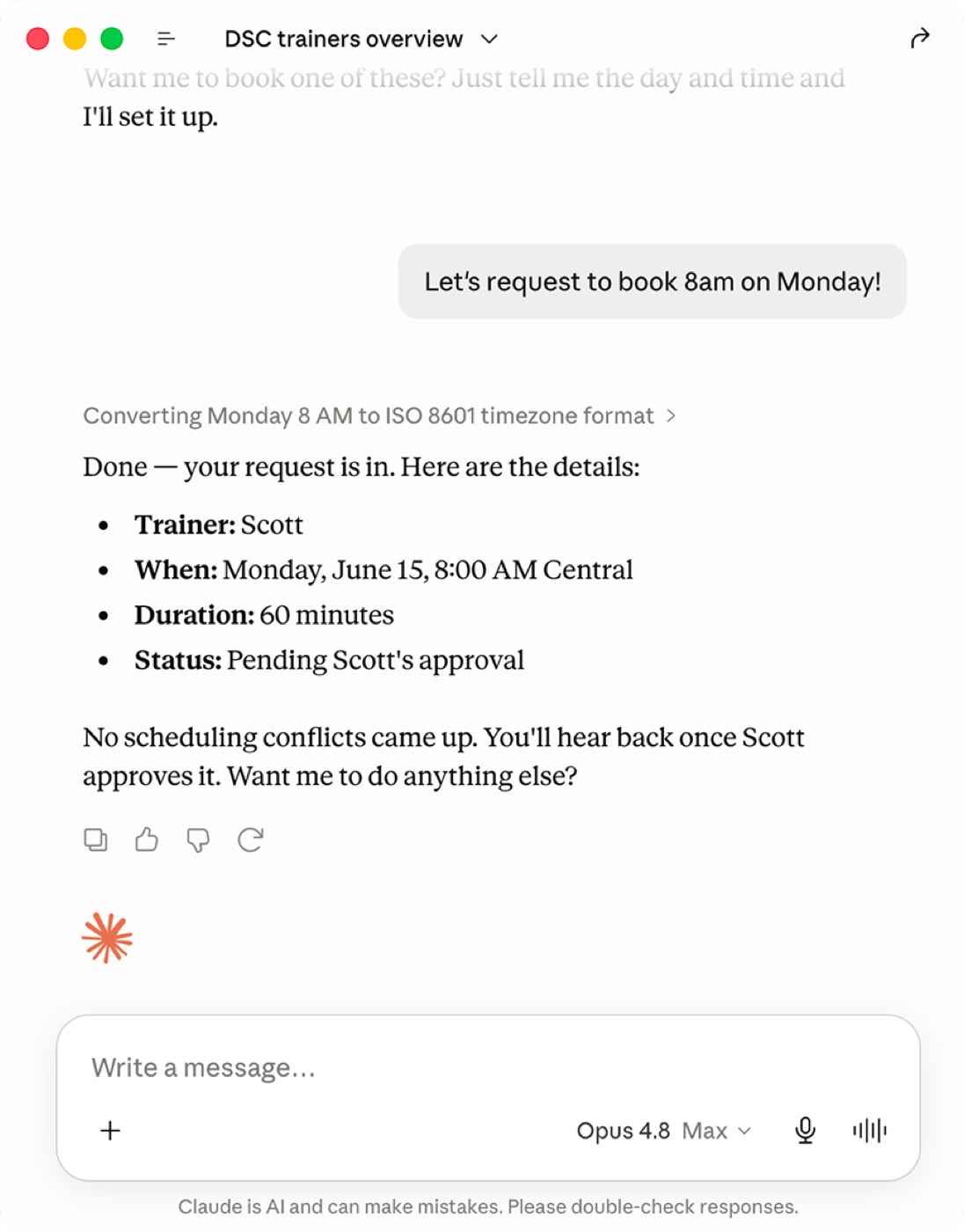
Software shaped to your business.
Off-the-shelf SaaS forces your business into someone else's design. Square decided what a restaurant looks like. Calendly decided how booking works. Most of the time, your actual business doesn't quite fit. You adapt. Pay monthly fees forever. Tell customers “sorry, the system can't do that.”
Or you build the tool that actually fits. AI changed the math on what that costs. What used to be a six-month custom build is a one-week sprint. What used to need an enterprise contract starts at the price of a year of SaaS. When something needs to change, the change happens in hours, not a roadmap meeting.
Field: Custom Software
Author: Jeremy Prasatik | Active since: 2026 | Status: Open for projects
Classification: AI Agents | Booking | CRM | Internal Tools
Connect: hello@reckon.house | 214.697.4578
Three ways most small businesses solve this. All three have a tradeoff that gets worse over time.
Every business owner has tried at least one. Most have tried all three. Here's where each one breaks.
Off-the-shelf SaaS
You pay forever for software that almost fits. The fees compound. The customizations stop where the platform's API ends. Your data is locked in their format. Year five of paying $200/month for Toast is $12,000 you'll never see again, and you still can't do the thing you wished it could do on day one.
Hiring an agency
$50K and four months later, you have a tool. Then you need a small change. The freelancer is on another project. The agency wants a new statement of work. The thing you owned starts feeling like something you're renting from your developer.
DIY with no-code
Notion, Airtable, Zapier, a dozen integrations duct-taped together. Works for a while. Then your team hits the ceiling: a workflow no-code can't quite handle, a customer-facing experience that looks like a Google Form, an automation that breaks every other Tuesday. The thing you built isn't a tool. It's a job.
Off-the-shelf SaaS
You pay forever for software that almost fits. The fees compound. The customizations stop where the platform's API ends. Year five of paying $200/month for Toast is $12,000 you'll never see again, and you still can't do the thing you wished it could do on day one.
Hiring an agency
$50K and four months later, you have a tool. Then you need a small change. The freelancer is on another project. The agency wants a new statement of work. The thing you owned starts feeling like something you're renting from your developer.
DIY with no-code
Notion, Airtable, Zapier, a dozen integrations duct-taped together. Works for a while. Then your team hits the ceiling: a workflow no-code can't quite handle, a customer-facing experience that looks like a Google Form, an automation that breaks every other Tuesday. The thing you built isn't a tool. It's a job.
Built once, owned forever
Changed in hours, not quarters
AI customer service that knows your business.
Off-the-shelf chatbots are trained on the internet. Yours should be trained on your business: hours, menu, policies, voice. Below is what that looks like for a coffee shop in East Austin. Your version answers in your tone, about your operation.
Your Business
293 / 2000What time do you close today?
We close at 3pm today. If you're coming by for a custom drink, Sam usually finishes the experimental menu around 2:30.
Booking that works the way you actually book.
Calendly assumes everyone books the same way. Real businesses don't. Set the rules: staff schedules, service types, lunch breaks, blackout days. The booker rebuilds itself in real time. The version below is configured for a hair salon working four days a week.
Your Rules
Change anything and the calendar rebuilds itself. Click a slot on the right to mark it booked.
Next Available
Hair cut & color · 90 min
Tue
Jun 23
Wed
Jun 24
Thu
Jun 25
Sat
Jun 27
Tue
Jun 30
A customer list that fits your industry.
A restaurant CRM is not a salon CRM is not a contractor CRM. The fields are different. The workflows are different. Pick the industry and the template configures itself. Below: a restaurant set up with allergies, favorite dishes, and visit history baked into the schema.
| Name | Phone | Last Visit | Favorite Dish | Allergies | Birthday | |
|---|---|---|---|---|---|---|
| Maria Vega | (512) 555-0142 | Apr 28 | Cacio e Pepe | Tree nuts | Aug 14 | |
| Daniel Chen | (512) 555-0188 | Apr 22 | Bone-in ribeye | — | Mar 03 | |
| Priya Shah | (512) 555-0167 | Apr 19 | Mushroom risotto | Shellfish | Nov 22 | |
| Tom & Lila Park | (512) 555-0123 | Apr 14 | Burrata appetizer | — | Jun 09 | |
| Eleanor Briggs | (512) 555-0199 | Apr 09 | Sea bass special | Dairy | Feb 17 |
5 of 5 rows
Built like an operating system, not a stack of subscriptions.
Each demo above runs as a standalone. The real upgrade is when they live together in one branded portal, with AI keeping the data flowing between them. Start with one tool. Add the next when the business needs it. The portal evolves with the business, not against it.
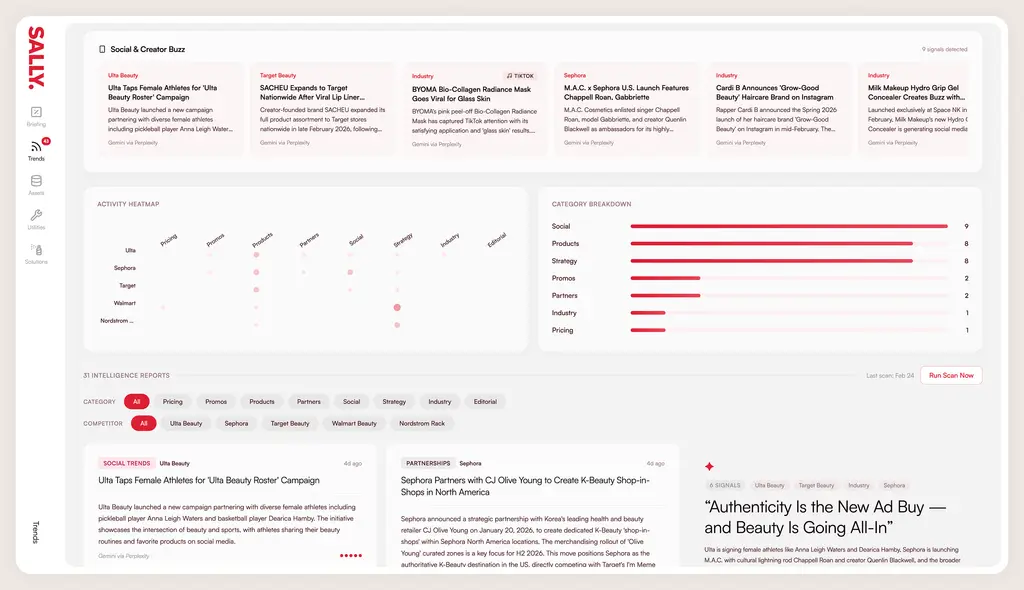
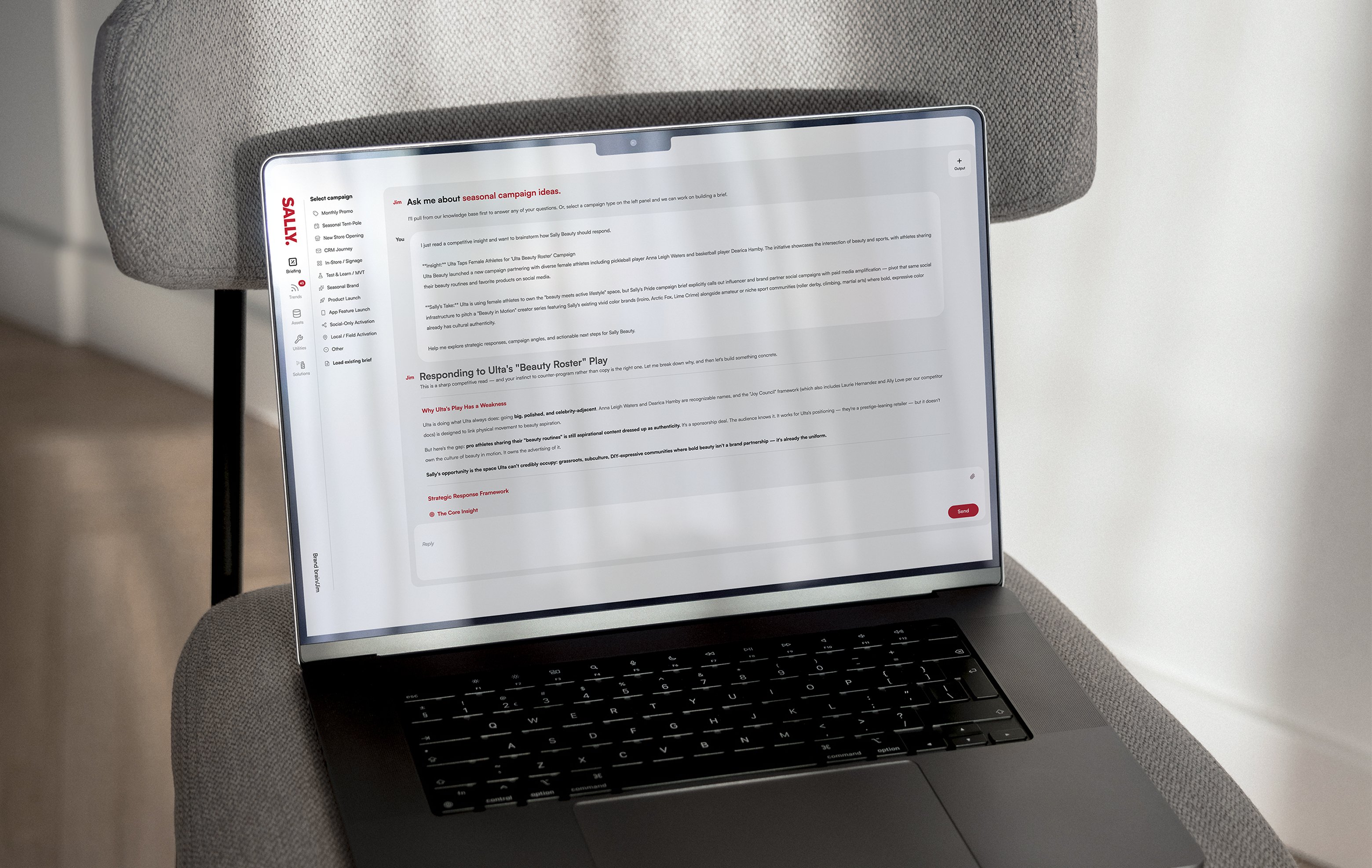
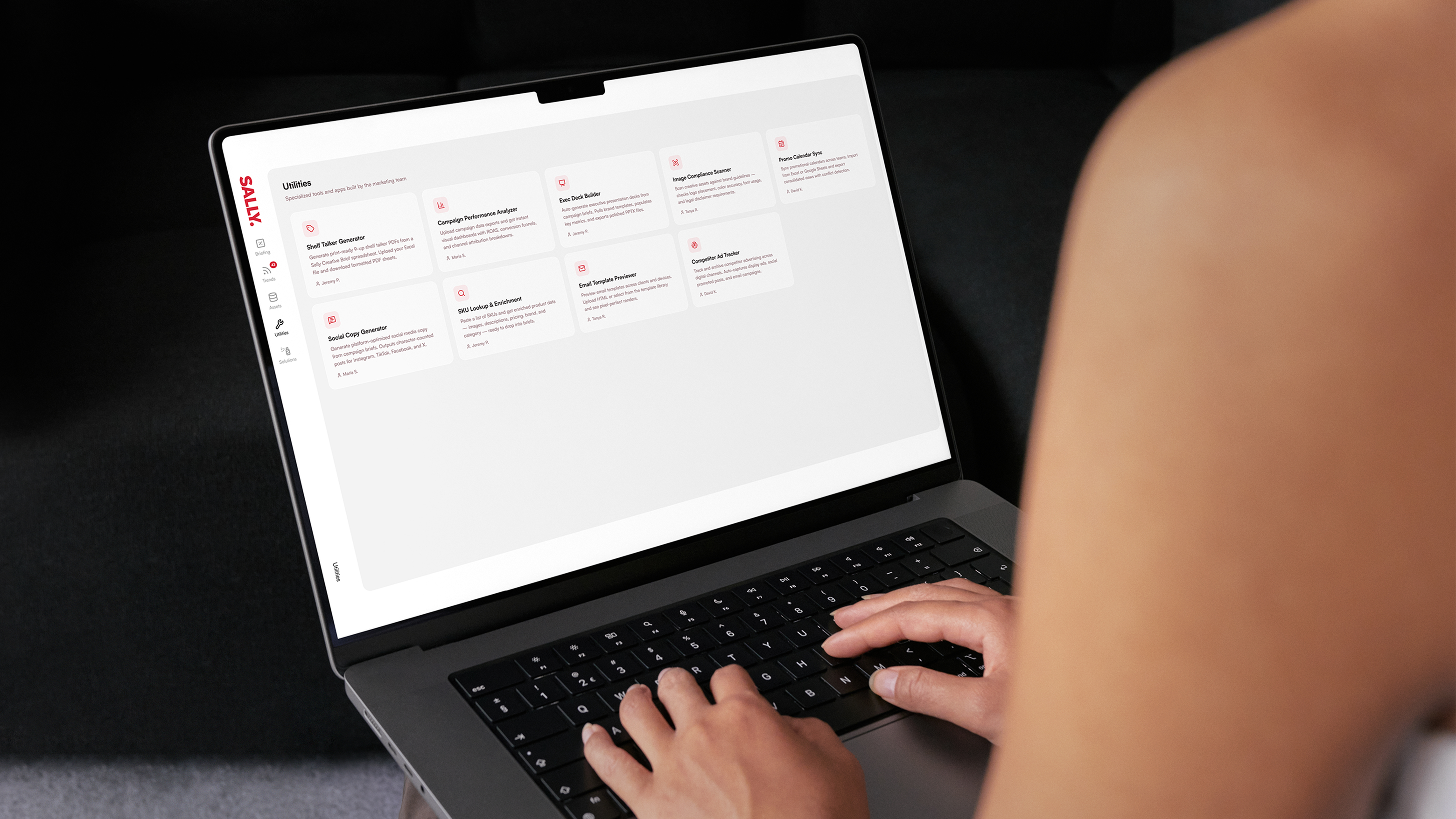
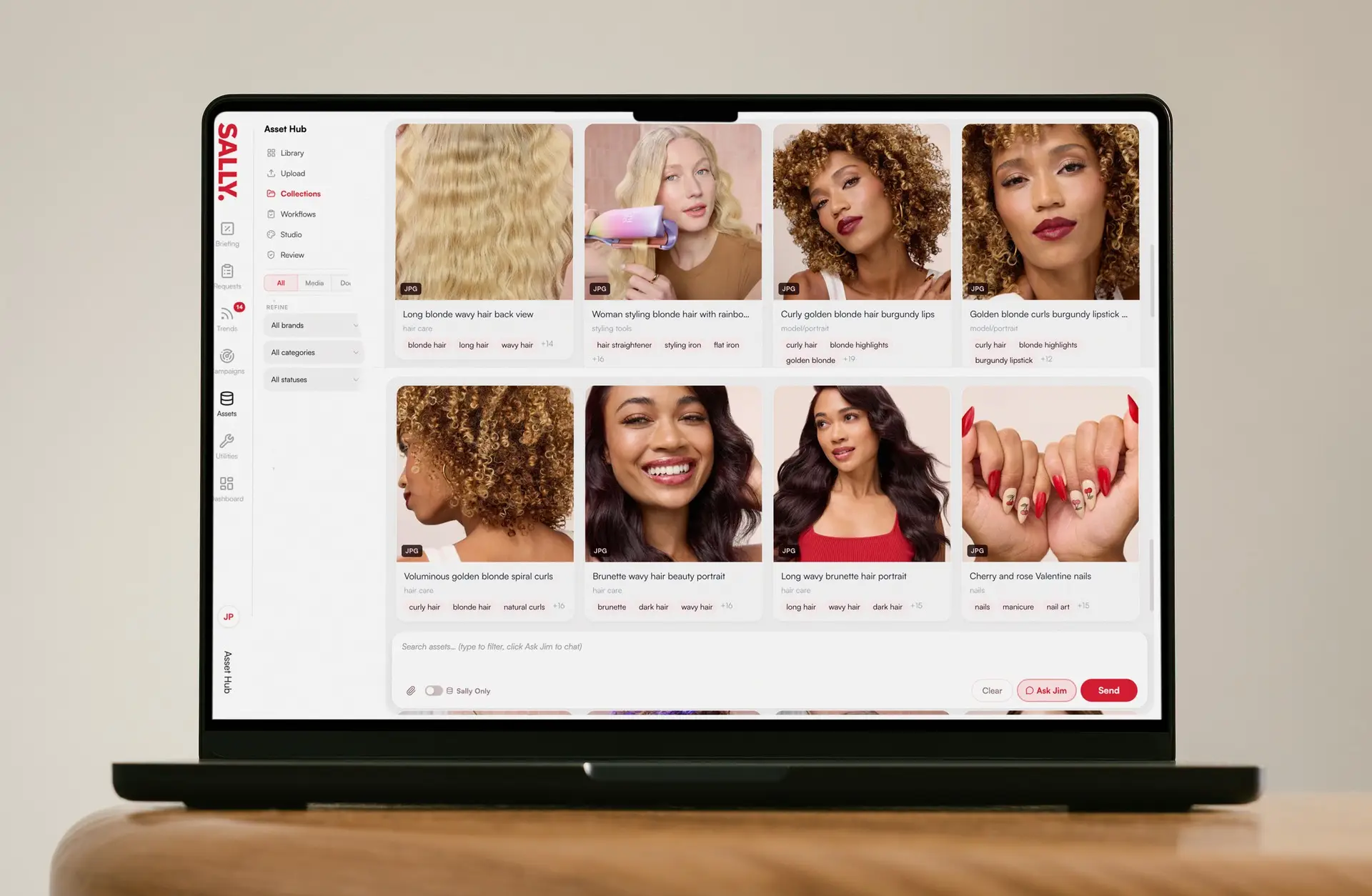
I built this model for Sally Beauty at enterprise scale: five connected platforms running signal to shelf. The architecture works at every size: one location or fifty, a single team or a whole organization. Same approach, different blast radius.

Sally Beauty Marketing OS. Five platforms in one branded portal. See the full case study →
Day one to deployed in two weeks.
Most engagements run a two-week shape. Some are faster. Some need three. Here's the typical arc.
Days 1–2 · Conversation
Two-hour kickoff call. We talk through the actual workflow, not abstractions. What does the day look like? Where does software get in the way? What do you wish the current tools did? I take notes, you correct them. By the end of the second day there's a written scope you've signed off on.
Days 3–7 · Build
I build. You review at end of day three with a working prototype, not mockups. Real data flows through it. We iterate on real edges. By day seven the core flows work end-to-end and the thing is hosted somewhere you can poke at it from your phone.
Days 8–14 · Refine and ship
You use it on real work for a week. Edge cases surface. We patch them. By day fourteen the tool is in production with your team using it daily. The relationship doesn't end here. Changes after launch are part of the ongoing arrangement.
Days 1–2 · Conversation
Two-hour kickoff call. We talk through the actual workflow, not abstractions. What does the day look like? Where does software get in the way? I take notes, you correct them. By end of day two there's a scope you've signed off on.
Days 3–7 · Build
I build. You review at end of day three with a working prototype, not mockups. Real data flows through it. By day seven the core flows work end-to-end and you can poke at it from your phone.
Days 8–14 · Refine and ship
You use it on real work for a week. Edge cases surface. We patch them. By day fourteen the tool is in production. Changes after launch are part of the ongoing arrangement.
Three tiers. No surprises.
Small business pricing for small businesses. Build, deployment, hosting, and ongoing changes are bundled. No hourly billing. No per-seat fees on top.
Starter
From $5,000
one-time
One tool. AI agent, booking widget, or small CRM.
- —One core tool, branded and deployed
- —Hosted on your domain
- —One round of changes per month
- —1–2 week build
Standard
From $15,000
one-time
A connected suite. Three tools that share data and login.
- —Three integrated tools
- —Single sign-on across them
- —Changes bundled in for six months
- —3–4 week build
Unlimited
$2,500
per month
An ongoing relationship. Whatever your business needs, built and maintained.
- —Unlimited tools, unlimited changes
- —Priority response on requests
- —Tools evolve as the business does
- —Always shipping
Every project is scoped against actual workflow. Final pricing depends on what gets built. The numbers above are typical starting points.
Tell me about your business.
If any of this resonated, the next step is a thirty-minute conversation. No pitch deck. No sales call. Just talking through what you're working with and whether there's a fit.
Designing across space and material.
Putting the work first.
Studio Reckon House Staples, a multi-disciplinary design and engineering practice
Founded 2002, based in Texas, working anywhere
Status Open for projects
Classification Digital, Branding, Interiors
Contact hello@reckon.house 214.697.4578 IG @reckonhousestaples LinkedIn /jeremy-prasatik
The Through-Line
The work means a lot of things at once - writing the code that ships an app, picking the marble that goes in a kitchen, art directing a campaign shoot, building a brand voice from scratch, designing the AI tooling that runs marketing operations at enterprise scale. These aren't separate jobs, they're the same job showing up in different rooms.
What makes it work is the no-handoff part. Wireframing and coding happen in the same week. Picking kitchen finishes and coordinating the install happen on the same site visit. The thinking and the making stay close to each other, which is why the disciplines stay connected instead of competing for attention.
© 2026 Reckon House. Made by Jeremy Prasatik.